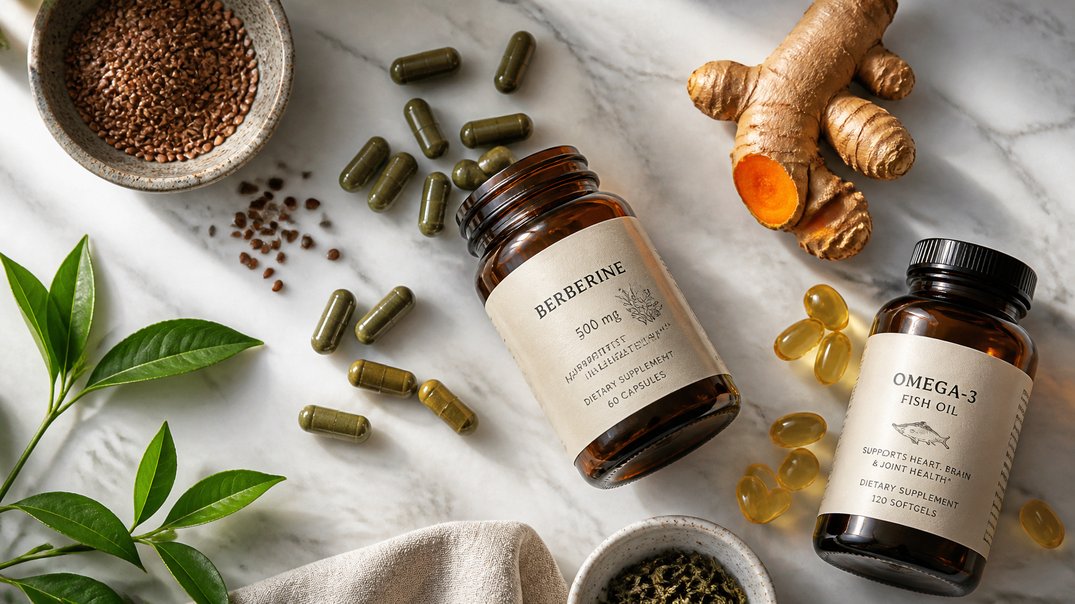
Supplement bundles — pre-packaged combinations of multiple products sold together, usually at a discount — have become common in the natural GLP-1 support space. The pitch is appealing: one purchase, complementary ingredients that work together, and a price lower than buying each item separately. Sometimes that pitch is genuine. Sometimes it’s a way to sell you more supplement than you need, at ingredients dosed below therapeutic levels, with the discount creating a sense of value that the product itself doesn’t deliver. This article shows you how to evaluate GLP-1 supplement bundles honestly, what to look for, and when building your own stack from single-ingredient products is the better choice.
What GLP-1 Support Bundles Typically Contain
Most GLP-1 or metabolic support bundles combine several of the natural supplements with the most recognized names in metabolic health. The most common components are:
- Berberine HCl (the anchor supplement in most GLP-1 bundles)
- Magnesium (often magnesium glycinate or citrate)
- Omega-3 fish oil
- Green tea extract standardized for EGCG
- Probiotics or digestive enzymes
- Chromium picolinate
- Cinnamon extract or berberine alternatives like inositol
The specific combination varies by brand and often reflects both the available evidence and the manufacturer’s ingredient costs. Some bundles are thoughtfully assembled around complementary mechanisms; others are collections of popular ingredients chosen for marketing appeal rather than evidence-based synergy.
The Core Evaluation Question: Are the Doses Therapeutic?
Everything else about a GLP-1 supplement bundle is secondary to this question. A bundle with five impressive ingredients at sub-therapeutic doses delivers less value than a single well-dosed berberine HCl supplement.
Start with berberine, since it’s the anchor of most GLP-1 bundles and the ingredient with the most dose-dependent clinical evidence. The evidence-supported dose is 1,500 mg/day — 500 mg three times daily with meals. If a bundle provides berberine at 300 mg per serving once daily, it’s providing one-fifth of the evidence-supported dose. No amount of additional ingredients compensates for the anchor ingredient being at a clinically irrelevant amount.
Apply the same check to every claimed active ingredient in the bundle:
- Magnesium glycinate: evidence-supported dose for metabolic benefit is 200–400 mg daily. A bundle providing 50 mg of magnesium oxide (a poorly absorbed form to begin with) isn’t contributing meaningful magnesium support.
- EGCG from green tea extract: target is 200–400 mg EGCG daily. A bundle listing “green tea extract 100 mg” without specifying EGCG content is unverifiable and likely under-dosed.
- Omega-3s: the relevant measure is EPA+DHA content, not total fish oil weight. A bundle providing “fish oil 500 mg” with unspecified EPA/DHA content may contain as little as 150–200 mg of actual omega-3 fatty acids — well below the 2–3g/day range used in metabolic research.
- Probiotics: viability at time of use (not manufacture) and specific strain identification matter far more than CFU count headline numbers.
If any major component in a bundle fails the therapeutic dose check, that component is effectively decorative — it’s on the label to fill out an impressive ingredient list rather than to contribute meaningful physiological benefit. A bundle where multiple components are under-dosed is marketing dressed as science.
Bundle Formats: Stacked Capsules vs. Separate Products
GLP-1 support bundles come in two structural formats, each with different implications for evaluation.
Single-Formula Multi-Ingredient Products
Some bundles are literally a single product — one capsule or serving that combines all the claimed ingredients. These are almost never able to deliver therapeutic doses of more than one or two ingredients at clinically meaningful amounts. A single capsule typically contains 500–800 mg total. That’s enough room for a therapeutic berberine dose, or for meaningful magnesium glycinate, but not for both simultaneously at evidence-supported levels — let alone alongside EGCG, omega-3s, and a probiotic.
Single-formula multi-ingredient products are the format most likely to contain proprietary blends that obscure sub-therapeutic ingredient amounts behind impressive total counts. They’re also the format where the gap between marketing claims (“complete GLP-1 support in one capsule”) and physiological reality is widest.
Multi-Product Bundle Kits
More honest bundles package separately bottled single-ingredient or transparently dosed products together at a combined price. A bundle containing a full-dose berberine HCl bottle, a separate magnesium glycinate bottle, and a separate omega-3 product is structurally different from a single-formula blend — each product can be independently evaluated for dose and quality, and the “bundle” is essentially a curated purchasing convenience rather than a formulation compromise.
This format is significantly easier to evaluate and more likely to deliver genuine value. Check each component product with the same criteria you’d use for a standalone purchase: correct form, therapeutic dose, third-party testing, GMP manufacturing. If each component passes, and the bundle price represents a genuine saving over buying the components separately, the bundle adds real value.
The Real Math: Bundle Savings vs. Component Costs
Bundle discounts are one of the primary selling points manufacturers use, and they require careful math rather than face-value acceptance.
Calculate what it would cost to purchase each component separately from reputable individual product suppliers — not from the same brand’s full-price individual products (which may be artificially priced to make the bundle look better). A berberine HCl supplement at 1,500 mg/day, a magnesium glycinate supplement at 300 mg/day, and an omega-3 supplement at 2–3g EPA+DHA/day from established brands with third-party testing typically costs $40–70 per month combined, depending on specific products chosen.
If a GLP-1 bundle containing comparable quality components at therapeutic doses is available for $35–50 per month, it represents genuine value. If a bundle offering sub-therapeutic doses of five ingredients is priced at $80 per month because it positions itself as a premium “complete solution,” it costs more while delivering less. The comparison that matters is cost per effective therapeutic dose, not total package price or discount percentage from the same brand’s retail prices.
Subscription Models and Auto-Ship Programs
Many GLP-1 supplement bundles are sold through subscription or auto-ship programs — you receive a monthly shipment automatically and pay a recurring fee, often with an initial discount for signing up. These models deserve specific scrutiny.
The initial discount in subscription programs is often significant and can make genuinely good products more accessible. The risks are: the subscription is difficult to cancel (common consumer complaint in the supplement industry), the product quality or formulation may change after the initial subscription period without notice, and the ongoing cost may not reflect the best price available for equivalent-quality individual components once you’ve been on the subscription for several months.
Before subscribing to any GLP-1 bundle, verify the cancellation process before you purchase (contact customer service and ask specifically), confirm the price lock duration, and check third-party review sources for cancellation difficulty complaints. A genuinely good product from a reputable company offers a clear, uncomplicated cancellation process — companies that make cancellation difficult are typically relying on inertia rather than product quality to retain customers.
When Bundles Make Sense vs. When to Build Your Own Stack
Bundles genuinely make sense in some situations and genuinely don’t in others. Here’s an honest framework:
Bundles make sense when:
- Each component in the bundle is a separately bottled product that can be independently evaluated for dose and quality
- The combined price represents a genuine saving over purchasing equivalent-quality components separately from reputable sources
- The bundle includes products from brands with established third-party testing credentials
- The convenience of one purchase and one subscription genuinely improves adherence to the supplement protocol
- You’re new to GLP-1 supplementation and want a curated starting point rather than navigating multiple individual purchasing decisions
Bundles don’t make sense when:
- The bundle is a single-formula product claiming to provide complete GLP-1 support in one or two capsules — the math cannot work for therapeutic multi-ingredient dosing
- Individual ingredient doses are not disclosed or are hidden in proprietary blends
- The bundle contains ingredients you don’t need or that have limited evidence (inflating the ingredient count for marketing purposes)
- The savings disappear when you compare to purchasing equivalent-quality components from alternative suppliers rather than the same brand’s full-price individual products
- You’ve already identified which specific supplements work best for your situation and prefer to optimize each independently
The DIY Stack: The Most Customizable and Often Most Cost-Effective Option
For people willing to do the research — which, having read through this site, you are — building your own GLP-1 support stack from individual products often outperforms bundles on both value and flexibility.
A DIY stack built around the evidence-supported components for natural GLP-1 support might look like:
- Berberine HCl 500 mg × 3 daily — the anchor; choose a third-party tested product from a GMP manufacturer at ~$25–35/month at therapeutic dose
- Magnesium glycinate 300 mg at bedtime — sleep, cortisol, insulin sensitivity; ~$10–15/month
- Omega-3 fish oil 2–3g EPA+DHA daily — inflammation, triglycerides, GLP-1 support; ~$15–25/month depending on dose and quality
- Psyllium husk 5–10g before meals — soluble fiber, GLP-1 stimulus, blood sugar; ~$5–10/month
Total: approximately $55–85 per month for the core stack, with each component independently verified, dosed at therapeutic levels, and adjustable based on your individual response and priorities. Compare this to a premium bundle at $80–120 per month that may not match this dosing profile despite the premium positioning.
The flexibility advantage of a DIY stack is also meaningful: if you discover that you tolerate berberine well but respond poorly to fish oil, you can adjust one component without changing the others. If your primary concern shifts from blood sugar to sleep quality, you can increase magnesium without modifying the rest of the stack. Bundles lock you into a fixed combination that may not be optimally suited to your evolving needs.
Applying the Full Evaluation Toolkit
Whether you’re evaluating a GLP-1 bundle or building your own stack from individual products, the same evaluation principles apply: transparent ingredient disclosure at therapeutic doses, correct forms (berberine HCl not unspecified berberine extract, magnesium glycinate not oxide), third-party testing from recognized organizations, GMP manufacturing, and honest price-per-effective-dose comparison.
The product reviews articles on this site cover each of these evaluation dimensions in detail. Before finalizing any purchase decision — bundle or individual — reviewing how to read a supplement label, what third-party testing verifies, and why proprietary blends are problematic gives you the complete framework to evaluate what you’re actually buying rather than what the marketing tells you you’re buying.
The natural GLP-1 support landscape has enough genuine, evidence-backed options that you don’t need to settle for products that prioritize marketing over formulation quality. Whether that means a well-constructed bundle or a self-assembled stack, the criteria for “worth it” are the same: therapeutic doses of evidence-supported ingredients, in verified forms, from third-party tested manufacturers, at a price that reflects actual value delivered rather than marketing investment recovered.