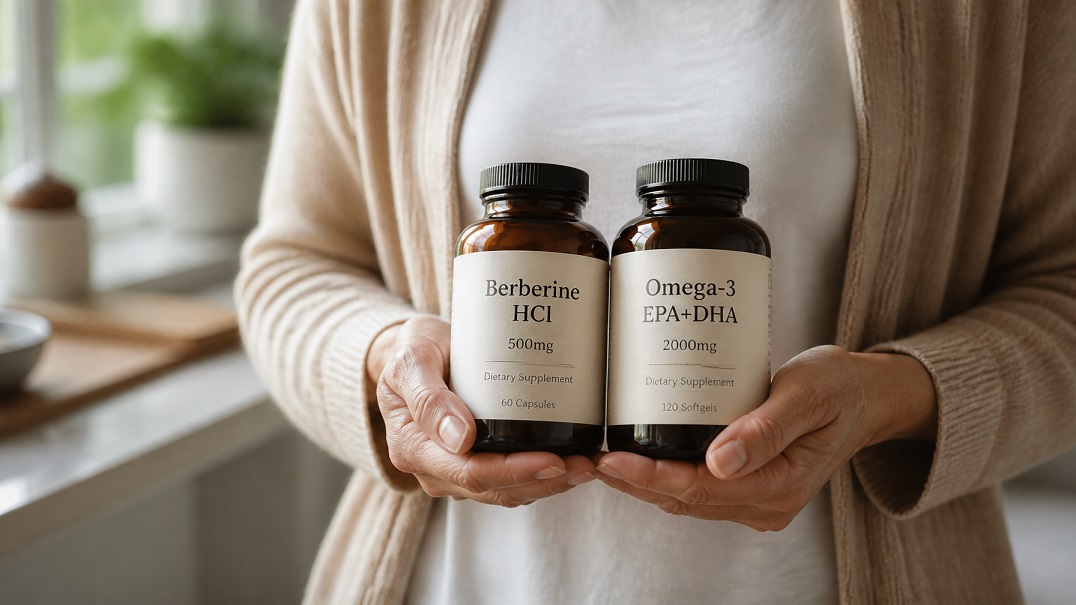
Most people buying supplements spend more time reading restaurant menus than supplement labels. That’s understandable — supplement labels are dense, use technical language, and are designed partly to impress rather than inform. But a label contains everything you need to know about whether a product is likely to work and whether it’s worth the price — if you know what to look for. This guide walks through every section of a supplement label with the specific context of GLP-1 supporting supplements in mind, so you can make informed purchasing decisions rather than marketing-driven ones.
The Supplement Facts Panel: Where the Real Information Lives
The Supplement Facts panel is the standardized information box required by the FDA on every supplement sold in the US. It’s the equivalent of the Nutrition Facts panel on food — the place where regulated, required information appears. Everything outside this panel is marketing. Start here and ignore the front of the label until you’ve assessed what’s inside.
Serving Size and Servings Per Container
The first two lines of the Supplement Facts panel are serving size and servings per container. These determine the actual cost per dose and whether the ingredient amounts listed are per serving or per capsule — a distinction that catches many buyers off guard.
A product might list berberine at 500 mg on the label, but if the serving size is two capsules and there are 30 servings per container, you’re getting 60 capsules — enough for 20 days if you’re taking the evidence-supported three-times-daily dose, not 30. Always calculate: servings per container divided by your daily serving frequency equals how many days the bottle lasts. A bottle that appears to cost less per unit may cost more per day of use at the correct therapeutic dose.
Pay attention to whether amounts are listed “per serving” or “per capsule.” If a product claims 1,500 mg of berberine per serving but the serving size is three capsules, each capsule contains 500 mg — which is what you’d expect. If the serving size is one capsule and the label shows 1,500 mg, that’s an unusually large single capsule and worth verifying.
Active Ingredients and Their Amounts
The core of the Supplement Facts panel lists each ingredient alongside its amount per serving. For GLP-1 supporting supplements, you’re looking for specific amounts that match what human trials have used — not just the presence of an ingredient.
For berberine, the evidence-supported dose from human trials is 1,500 mg/day in divided doses. A product listing 300 mg per serving with a three-times-daily protocol provides 900 mg/day — below the clinically studied range. A product at 500 mg per serving taken three times daily hits the 1,500 mg target. Check that the math works at the recommended serving frequency.
For EGCG (green tea extract), look for the standardized EGCG content specifically — not just total green tea extract weight. A label listing “green tea extract 500 mg” tells you nothing useful unless it specifies the EGCG percentage or absolute EGCG milligrams. The evidence-supported target is 200–400 mg of EGCG daily. A product standardized to 45% EGCG at 500 mg total extract provides 225 mg EGCG — within range. A product at the same 500 mg total with only 10% EGCG standardization provides 50 mg — far below the effective range.
For psyllium husk, the fiber content matters more than the total weight. Look for the grams of dietary fiber listed in the Supplement Facts rather than just the psyllium husk weight, since moisture content and form affect how much actual fiber a given weight provides. Trials supporting GLP-1 and blood sugar benefits use 10–15g of psyllium fiber daily in divided doses.
Proprietary Blends: A Significant Red Flag
A proprietary blend is a combination of ingredients listed together under a single total weight, without disclosing the individual amounts of each component. The label might say “GLP-1 Support Blend: 750 mg (berberine HCl, chromium picolinate, cinnamon extract, alpha-lipoic acid)” — but you have no way of knowing how much berberine is in that 750 mg total.
This is a meaningful problem for evidence-based supplement evaluation. If 700 mg of the 750 mg blend is inert filler or low-cost chromium, and only 50 mg is berberine, you’re getting a fraction of the therapeutic dose while paying for the appearance of a comprehensive formula. Manufacturers use proprietary blends to protect formulas from copying — but they also use them to obscure the fact that expensive active ingredients appear in sub-therapeutic “fairy dust” amounts.
For GLP-1 supporting supplements where specific dosing matters, avoid proprietary blends unless you can verify through the manufacturer that the key active ingredients are present at clinically meaningful amounts. Single-ingredient products or transparently dosed formulas are significantly easier to evaluate and compare. Our article on proprietary blends vs. single-ingredient supplements covers this in more detail.
The “Other Ingredients” Section
Below the active ingredients, the Supplement Facts panel lists “Other Ingredients” — the excipients, fillers, binders, and coatings that make capsules or tablets manufacturable. Most are inert and harmless, but a few are worth knowing about.
Magnesium stearate is a common flow agent that allows powder to move through manufacturing equipment without clumping. It’s safe at the amounts used in supplements, despite occasional claims otherwise. Its presence is neutral information.
Titanium dioxide is a whitening agent used in some capsule coatings. There’s ongoing discussion about whether it poses any health concern at supplement doses; most regulatory bodies consider it safe currently, but some consumers prefer to avoid it. Its presence in a supplement isn’t a dealbreaker but is worth noting if you’re attentive to additives.
Artificial colors, sweeteners, or flavors in capsule supplements — rather than in flavored powders or gummies where they make more sense — are a minor negative. They add no therapeutic value and occasionally cause sensitivity reactions in some people. Their absence is a small positive indicator of product quality.
Gelatin vs. vegetable capsules — gelatin capsules are derived from animal products (typically pork or bovine). Vegetable capsules (usually hydroxypropyl methylcellulose, or HPMC) are suitable for vegetarians and vegans. This appears in the Other Ingredients section and is clearly relevant for anyone with dietary restrictions.
Form of the Active Ingredient: Why It Matters
For many GLP-1 relevant supplements, the specific chemical form of the active ingredient significantly affects how well it works. The ingredient name alone isn’t enough — you need to know the form.
Berberine forms: Most supplements use berberine HCl (hydrochloride salt), which is the standard form used in the majority of clinical trials. Berberine HCl is the appropriate form to look for and compare. Newer forms like dihydroberberine claim significantly higher bioavailability and are marketed at lower doses (typically 100–200 mg per serving versus 500 mg for berberine HCl). The dihydroberberine evidence is promising but not yet supported by the volume of PCOS or metabolic trials that berberine HCl has behind it. Our article on the best forms of berberine covers these differences in detail.
Magnesium forms: Magnesium glycinate is the preferred form for sleep and cortisol support (as covered throughout this site). Magnesium oxide is poorly absorbed and frequently causes loose stools. Magnesium citrate is better absorbed than oxide but less gentle than glycinate. The form appears in the Supplement Facts panel — “magnesium (as magnesium glycinate)” — and matters significantly for both efficacy and tolerability.
Curcumin forms: Standard curcumin extract has very poor bioavailability. Enhanced forms — including BCM-95, Meriva, and piperine-enhanced formulas — substantially improve absorption. A label listing plain “turmeric extract” or “curcumin” without specifying an enhanced form is unlikely to deliver meaningful blood levels at standard doses. Look for the specific bioavailability-enhanced designation.
Third-Party Testing Certifications
The FDA doesn’t approve supplements before they go to market or verify that what’s on the label is actually in the bottle. Third-party testing fills this gap — independent laboratories verify that the product contains what it claims, in the amounts stated, without contaminants.
Look for seals from established third-party testing organizations on the label or the product website. The most recognized are:
- USP Verified — United States Pharmacopeia; tests for identity, potency, purity, and dissolution
- NSF Certified for Sport — particularly rigorous; tests for over 270 substances banned in sports, plus label accuracy and contaminants
- Informed Sport / Informed Choice — similar to NSF, batch-tested for banned substances and label accuracy
- ConsumerLab.com — independent testing organization that publishes results publicly; products can display their approval seal if they pass
The absence of a third-party seal doesn’t automatically mean a product is poor quality — many reputable smaller manufacturers test their products but don’t pursue the certification process. However, the presence of a recognized seal provides meaningful, independent assurance that the label accurately reflects the contents. For expensive supplements like berberine where dosing precision matters, third-party verification is worth seeking. Our article on third-party testing in supplements covers what to look for in detail.
Front-of-Label Claims: What They Mean and What They Don’t
The front of a supplement label is marketing space, not regulated information. Understanding what’s permitted — and what’s meaningless — helps you filter out noise.
Structure/function claims are statements about how a supplement supports normal body functions: “supports healthy blood sugar levels,” “promotes metabolic health,” “supports GLP-1 function.” These are legal without FDA approval as long as they’re accompanied by the disclaimer “This statement has not been evaluated by the Food and Drug Administration. This product is not intended to diagnose, treat, cure, or prevent any disease.” Their presence is not evidence that the product works — it just means the manufacturer has filed the required notification. The disclaimer will be somewhere on the label, often in small print.
Disease claims — “lowers blood sugar,” “treats insulin resistance,” “cures diabetes” — are illegal for supplement labels in the US. If you see these claims, they indicate a manufacturer willing to violate FDA regulations, which is itself a red flag about the product’s overall quality and honesty.
“Natural,” “pure,” “clean,” and similar terms have no regulated definitions in the supplement context. They’re marketing language with no standardized meaning. A product calling itself “all natural” may contain synthetic ingredients; a product without that claim may be equally or more natural in formulation.
“Clinically studied” or “clinically proven” can mean anything from “the individual ingredients have been studied in clinical trials” (reasonable) to “we paid for a study of our specific product” (less meaningful, since manufacturer-funded single studies are low-quality evidence) to “we’ve seen some studies that mention ingredients we use” (nearly meaningless). Look for published peer-reviewed research on the specific active ingredients at the specific doses in the product, not just a vague “clinically studied” badge.
Putting It Together: A Quick Label Evaluation Checklist
When evaluating any GLP-1 supporting supplement, run through these questions before purchasing:
- What is the serving size and how many days does a bottle last at the correct therapeutic dose? Calculate actual cost per day of use, not cost per bottle or per serving.
- Are active ingredients listed individually with specific amounts? If it’s a proprietary blend, consider avoiding or contacting the manufacturer for dosing confirmation.
- Do the ingredient amounts match what human trials have used? Compare to evidence-supported doses (1,500 mg/day for berberine HCl; 200–400 mg EGCG; 10–15g psyllium fiber).
- What form is the active ingredient in? Berberine HCl, magnesium glycinate, bioavailability-enhanced curcumin — form determines efficacy.
- Is there third-party testing certification? USP, NSF, Informed Sport, or ConsumerLab verification provides independent assurance of label accuracy.
- What does the “Other Ingredients” list contain? Unnecessary additives, artificial colors, or concerning fillers are minor negatives worth noting.
- What claims does the front of label make? Structure/function claims are legal but unverified. Disease claims are illegal and a red flag. Vague marketing terms like “natural” and “pure” are meaningless.
A supplement that passes this checklist — transparent dosing of evidence-supported ingredients at therapeutic amounts, in the right form, with third-party verification — is worth paying a modest premium for over a cheaper product that obscures its formulation behind a proprietary blend and impressive-sounding front-of-label claims.