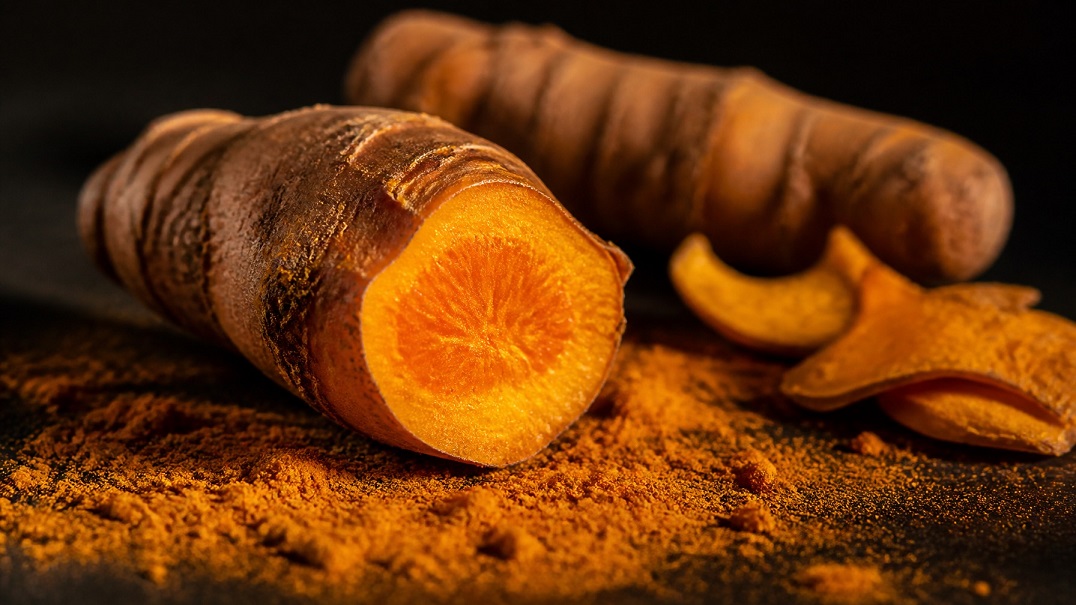
Turmeric has been celebrated in wellness circles for long enough that almost any health claim attached to it gets an automatic credibility boost — whether or not the evidence supports it. Curcumin, the bioactive compound in turmeric responsible for its bright yellow color and most of its studied health effects, has been examined in hundreds of clinical trials covering everything from arthritis to cancer to metabolic disease. In the GLP-1 context specifically, curcumin’s relationship is real but indirect, and the honest assessment requires separating what the research actually shows from what enthusiasts tend to claim. This article does that.
What Curcumin Is and How It Works
Curcumin is a polyphenol compound — a class of plant-derived molecules with antioxidant and anti-inflammatory properties — found in the rhizome of Curcuma longa, the turmeric plant. It makes up roughly 2 to 5% of dried turmeric powder by weight, which is why turmeric as a spice delivers relatively modest amounts of curcumin compared to concentrated supplements.
Curcumin’s primary well-documented mechanisms are anti-inflammatory and antioxidant. It inhibits NF-κB — a protein complex that plays a central role in regulating inflammatory gene expression — and modulates several other inflammatory signaling pathways. It also activates Nrf2, a transcription factor that induces the expression of antioxidant and cytoprotective genes. These mechanisms explain why curcumin has attracted research interest across such a wide range of inflammatory and oxidative stress-driven conditions.
The Bioavailability Problem
Before discussing what curcumin can do, it’s important to establish a significant limitation: curcumin is notoriously poorly absorbed from the gut in its standard form. Studies measuring curcumin blood levels after oral supplementation have found very low systemic concentrations even at high doses, because curcumin is rapidly metabolized in the intestinal wall and liver and has limited water solubility that restricts absorption in the first place.
This bioavailability problem is real enough that it has generated an entire category of enhanced-bioavailability curcumin formulations — products using piperine (from black pepper), lipid-based delivery systems (like Meriva or BCM-95), or nanoparticle encapsulation to substantially improve absorption. These formulations can increase curcumin bioavailability by anywhere from 20 to 2,000 times compared to standard curcumin powder, depending on the technology. For any GLP-1-relevant effects to materialize, a bioavailable curcumin formulation is essentially a prerequisite — standard turmeric powder at typical culinary doses is unlikely to deliver enough curcumin to systemic circulation to produce meaningful metabolic effects.
Curcumin and GLP-1: The Indirect Connection
Curcumin does not directly stimulate GLP-1 secretion from L-cells the way berberine does, nor does it inhibit DPP-4 the way EGCG may. Its relationship to GLP-1 is more indirect — working through pathways that create a more favorable hormonal environment for GLP-1 to function effectively rather than boosting GLP-1 output directly.
Inflammation and GLP-1 Receptor Sensitivity
Chronic low-grade inflammation is one of the factors that impairs GLP-1 receptor sensitivity in the tissues where GLP-1 does its work — particularly the pancreatic beta cells and the hypothalamus. When inflammatory signaling is elevated, GLP-1 receptors on these cells become less responsive to GLP-1 binding, meaning the same amount of GLP-1 produces a weaker downstream effect. This is analogous to the relationship between inflammation and insulin resistance — chronic inflammation makes cells less responsive to hormonal signals they would otherwise respond to efficiently.
Curcumin’s anti-inflammatory effects, if delivered in sufficient bioavailable concentrations, may support GLP-1 receptor sensitivity by reducing this inflammatory suppression. The evidence for this specific mechanism in humans is indirect — curcumin trials rarely measure GLP-1 receptor sensitivity directly — but it’s consistent with the broader pattern of inflammation impairing hormonal signaling and anti-inflammatory interventions improving it.
Insulin Sensitivity and Metabolic Health
Several human trials have examined curcumin’s effects on insulin sensitivity and blood sugar, particularly in people with prediabetes and type 2 diabetes. A frequently cited 2012 study in Diabetes Care found that curcumin supplementation over nine months significantly reduced the rate of progression from prediabetes to type 2 diabetes compared to placebo — a striking finding that has been replicated in some subsequent trials, though not all. Improvements in insulin sensitivity and beta cell function were among the mechanisms proposed to explain the effect.
Better insulin sensitivity is relevant to GLP-1 in an indirect way: it reduces the metabolic strain on the pancreatic beta cells that GLP-1 depends on for its insulin-stimulating effects to produce meaningful outcomes. A more insulin-sensitive system gets more metabolic mileage from the GLP-1 signal than an insulin-resistant one does.
Gut Microbiome Support
A third GLP-1-adjacent mechanism for curcumin involves the gut microbiome. Research has found that curcumin modifies gut microbiome composition in ways that tend to favor metabolically beneficial bacterial populations — including increased Bifidobacterium levels and reduced populations of certain inflammatory bacterial species. Since gut microbiome composition directly influences SCFA production and GLP-1 stimulation, curcumin’s microbiome-modifying effects represent another indirect pathway by which it may support GLP-1 output. As covered in GLP-1 and Gut Health: The Surprising Connection, a healthier, more diverse microbiome is a stronger GLP-1 producer.
What the Clinical Evidence Shows Directly
Setting aside the indirect mechanisms, what does the clinical evidence show for curcumin’s effects on the outcomes most relevant to GLP-1 support — blood sugar, weight, and metabolic health?
Blood Sugar and Prediabetes
The evidence for curcumin’s effects on blood sugar is among the more credible in its clinical portfolio, particularly for people with prediabetes or early-stage insulin resistance. The 2012 Diabetes Care study mentioned above showed a significant reduction in prediabetes progression. A 2019 meta-analysis in Nutrition Journal examining multiple curcumin trials found meaningful reductions in fasting blood sugar and HbA1c in people with type 2 diabetes, though the effect sizes were generally smaller than those seen with berberine.
Important caveat: the majority of positive curcumin trials have used bioavailable formulations — with piperine or lipid-based delivery systems — rather than standard curcumin powder. Trials using non-enhanced curcumin have produced less consistent results, which is consistent with the bioavailability problem described above.
Weight and Body Composition
Curcumin’s effects on body weight are more modest and less consistently demonstrated than its blood sugar effects. Some trials have found small but statistically significant reductions in BMI and waist circumference, while others have found no significant weight effect. A 2019 meta-analysis in Frontiers in Pharmacology found modest but significant reductions in body weight, BMI, and waist circumference across curcumin trials, with the effects being most pronounced in people who were overweight or had metabolic syndrome at baseline.
These weight effects are likely more attributable to curcumin’s anti-inflammatory and insulin-sensitizing effects than to any direct appetite-suppressing mechanism comparable to GLP-1. Curcumin is not primarily an appetite suppressant, and expecting it to reduce hunger the way berberine or psyllium might is not consistent with its known mechanisms.
Inflammation and Metabolic Syndrome
Where curcumin’s clinical evidence is most consistent and largest in effect size is in inflammatory markers — C-reactive protein (CRP), interleukin-6 (IL-6), and TNF-alpha are among the most frequently studied, and multiple meta-analyses have found significant reductions in these markers with curcumin supplementation. For people whose metabolic health problems are driven substantially by chronic inflammation — a large proportion of people with metabolic syndrome — this anti-inflammatory effect is genuinely meaningful and may improve GLP-1 receptor function as a downstream consequence.
Dosage and Formulation for GLP-1 Support
Given the bioavailability challenge, standard curcumin powder at typical supplement doses is unlikely to produce meaningful GLP-1-adjacent effects. The clinical trials showing positive metabolic results have predominantly used enhanced-bioavailability formulations at doses providing 500 to 2,000 milligrams of curcumin equivalent per day.
The most widely available and studied bioavailability-enhancing approaches are:
- Piperine co-administration — typically 20 milligrams of piperine alongside 1,000 milligrams of curcumin, shown in research to increase curcumin bioavailability by approximately 2,000% compared to curcumin alone. This is the most cost-effective approach and widely available in combination supplements. Note that piperine also inhibits certain drug-metabolizing enzymes, so anyone on prescription medication should check for interactions.
- Meriva — a patented phosphatidylcholine-curcumin complex with documented 29-fold higher bioavailability than standard curcumin in human pharmacokinetic studies
- BCM-95 (Biocurcumax) — a curcumin-essential oil combination with documented 6.93-fold higher bioavailability than standard curcumin
- Theracurmin — a nanodispersed curcumin preparation with documented higher bioavailability in human studies
For someone adding curcumin to a natural GLP-1 strategy, a product using one of these enhanced-bioavailability approaches is substantially preferable to standard turmeric extract or curcumin powder. The front-label milligram count is less meaningful than the bioavailability technology behind it.
How Curcumin Fits in a Natural GLP-1 Strategy
Curcumin occupies a supporting rather than primary role in a natural GLP-1 support strategy. It is not a direct GLP-1 stimulator like berberine or dietary fiber, and its effects on blood sugar and appetite are more modest and indirect. Its most valuable contribution is its anti-inflammatory effect, which may improve the hormonal environment in which GLP-1 operates — reducing the inflammatory suppression of GLP-1 receptor sensitivity that impairs GLP-1’s downstream metabolic effects in people with chronic inflammation.
For people with inflammatory conditions, metabolic syndrome, or chronic low-grade inflammation driving their metabolic challenges, curcumin is a more compelling addition to their natural GLP-1 strategy than it is for people whose metabolic health is generally good. For people looking for direct GLP-1 stimulation and appetite support, berberine and psyllium remain the stronger choices.
For a framework that integrates curcumin alongside the primary GLP-1-supporting supplements, see The Best Supplement Stack for Natural GLP-1 Support. For the next absorption-enhancing topic — which applies to curcumin more than almost any other supplement — see How to Maximize Curcumin Absorption (Bioavailability Explained).