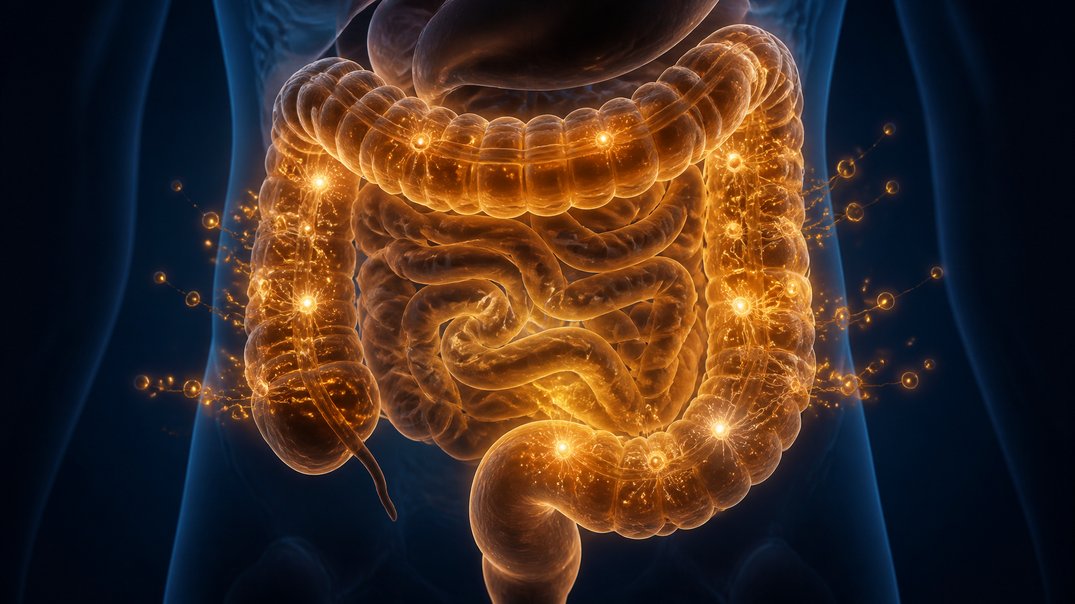
When people think about gut health, they typically think about digestion — bloating, regularity, discomfort. The connection between gut health and metabolic hormones like GLP-1 rarely enters the conversation, which is a significant gap. Over the past decade, research has established that the community of microorganisms living in your digestive tract — your gut microbiome — plays a direct and meaningful role in regulating GLP-1 production. This means that the state of your gut health isn’t just a digestive issue. It’s a metabolic one, with consequences for appetite, blood sugar, and weight that most people have no idea their gut bacteria are influencing.
Why the Gut Microbiome Matters for GLP-1 Production
The link between your gut bacteria and GLP-1 output centers on a class of molecules called short-chain fatty acids (SCFAs). When fiber-fermenting bacteria in your colon break down dietary fiber — particularly soluble, fermentable fiber — they produce SCFAs as a byproduct. The three most important SCFAs in this context are butyrate, propionate, and acetate. These molecules don’t just stay in the colon. They interact directly with receptors on the L-cells that produce GLP-1, stimulating those cells to release the hormone into the bloodstream.
The SCFA-GLP-1 pathway is one of the most well-characterized mechanisms connecting diet, gut bacteria, and metabolic hormones. It explains, in biological terms, why people who eat fiber-rich diets tend to have better appetite regulation and more stable blood sugar than those who don’t — and why the benefit isn’t simply a matter of fiber slowing digestion mechanically. The bacteria are actively participating in the process, converting dietary fiber into molecular signals that drive GLP-1 production. As covered in How Your Body Produces GLP-1 Naturally, this SCFA pathway is the primary mechanism by which dietary fiber stimulates GLP-1 release.
Which Bacteria Matter Most
Not all gut bacteria contribute equally to SCFA production and GLP-1 stimulation. The fiber-fermenting species that produce the most relevant SCFAs include members of the genera Faecalibacterium, Roseburia, Eubacterium, and Bifidobacterium, among others. These bacteria thrive on fermentable fiber and decline in populations when fiber intake is low — one of several reasons why a low-fiber diet undermines GLP-1 output.
Beyond SCFA producers, one species has attracted particular research attention for its relationship with GLP-1 and metabolic health: Akkermansia muciniphila. This bacterium lives in the mucus layer of the intestinal wall and has been found in multiple studies to be associated with better metabolic outcomes, including improved GLP-1 sensitivity and reduced insulin resistance. People with obesity and type 2 diabetes tend to have lower levels of Akkermansia than metabolically healthy individuals. Whether boosting Akkermansia levels directly improves GLP-1 function in humans is still being studied, but the association is consistent and biologically plausible.
How a Disrupted Microbiome Impairs GLP-1
A healthy, diverse microbiome actively supports GLP-1 production through the SCFA pathway and other mechanisms. A disrupted microbiome — one that is low in diversity, depleted in beneficial species, or dominated by less helpful bacteria — impairs that support in several ways that compound over time.
Reduced SCFA Production
The most direct consequence of a degraded microbiome is reduced SCFA output. When fiber-fermenting bacteria are depleted — through a low-fiber diet, antibiotic exposure, chronic stress, or poor sleep — the SCFA-GLP-1 signaling pathway weakens. L-cells receive less stimulation, GLP-1 output after meals is lower, and the downstream effects on appetite and blood sugar regulation suffer. This is a concrete, measurable mechanism by which gut health translates directly into metabolic hormone function.
Increased Intestinal Permeability
A disrupted microbiome is also associated with increased intestinal permeability — a condition colloquially called “leaky gut,” in which the tight junctions between intestinal cells loosen, allowing bacterial fragments and other compounds to pass through the gut wall into the bloodstream. This triggers low-grade systemic inflammation, which impairs GLP-1 receptor sensitivity and interferes with insulin signaling. The inflammation-GLP-1 connection is an area of active research, but the consistent finding is that chronic low-grade inflammation — much of which originates from a compromised gut barrier — correlates with reduced GLP-1 function.
Altered Bile Acid Metabolism
A less commonly discussed but mechanistically important connection involves bile acids. Your gut bacteria transform the bile acids your liver produces into secondary bile acids, some of which directly stimulate GLP-1 secretion from L-cells through receptors called TGR5. A disrupted microbiome alters this bile acid transformation, potentially reducing one of the secondary pathways through which GLP-1 is stimulated after meals. This is an area where the science is still developing, but it adds another dimension to the gut-GLP-1 relationship that goes beyond simple SCFA production.
The Bidirectional Relationship: GLP-1 Also Shapes the Gut
The connection between gut health and GLP-1 isn’t one-directional. GLP-1 itself influences gut function in ways that circle back to affect the microbiome environment. GLP-1 slows intestinal motility — the rate at which food moves through the digestive tract — which changes the conditions in which gut bacteria live and feed. It also has direct effects on the intestinal epithelium, the lining of the gut, that may influence the barrier function that keeps bacterial products from leaking into the bloodstream.
This bidirectionality means that improving GLP-1 output through gut health improvements creates a reinforcing feedback loop. Better gut health leads to more GLP-1, which supports better gut function, which further supports GLP-1 production. The reverse is equally true: a disrupted gut produces less GLP-1, impaired GLP-1 function contributes to altered gut motility and barrier function, and the microbiome environment deteriorates further. Which direction the cycle runs depends substantially on diet and lifestyle choices.
Practical Strategies for the Gut-GLP-1 Connection
Understanding the gut-GLP-1 relationship suggests a clear set of practical priorities for anyone looking to support their natural GLP-1 output through gut health.
Fermentable Fiber Is the Foundation
The SCFA-GLP-1 pathway runs on fermentable fiber. Without adequate fermentable fiber, the bacteria that drive GLP-1 stimulation are starved, their populations decline, and SCFA output falls. The most effective fiber sources for gut bacteria are those that ferment slowly and completely in the colon: oats, legumes, onions, garlic, leeks, Jerusalem artichokes, green bananas, and cooked-and-cooled rice and potatoes (which develop resistant starch). Psyllium husk is a particularly practical supplement option because it provides concentrated soluble fiber that feeds gut bacteria effectively. For more detail, see How Dietary Fiber Boosts GLP-1: A Complete Guide.
Fermented Foods Feed Beneficial Bacteria
Fermented foods — yogurt, kefir, sauerkraut, kimchi, miso, tempeh — introduce live beneficial bacteria and have been shown in research to increase microbiome diversity over time. A landmark Stanford study found that a diet high in fermented foods increased microbiome diversity and reduced markers of inflammation more effectively than a high-fiber diet alone over a ten-week period. The combination of fermented foods and high fiber appears to be more powerful than either alone — the fiber feeds the bacteria that fermented foods introduce and amplify.
Probiotic Supplements: A Targeted Approach
Probiotic supplements introduce specific bacterial strains that may support the microbiome environment relevant to GLP-1 production. The strains with the most relevant research are those from the Lactobacillus and Bifidobacterium genera, which have been shown in multiple studies to support metabolic health outcomes. Probiotic effects are strain-specific and variable between individuals — they work best as a complement to dietary fiber rather than a substitute for it. For guidance on choosing a probiotic specifically for GLP-1 support, see How to Choose a Probiotic for GLP-1 Support.
Reducing What Disrupts the Microbiome
Supporting gut health for GLP-1 isn’t only about what you add — it’s also about reducing what disrupts. Unnecessary antibiotic use, chronic stress, poor sleep, excessive alcohol, and a diet dominated by ultra-processed foods all degrade the microbiome in ways that impair the gut-GLP-1 pathway. None of these are easy to eliminate entirely, but reducing their cumulative burden meaningfully protects the microbiome environment that GLP-1 production depends on.
The Gut-GLP-1 Connection in Practice
The practical takeaway from the gut-GLP-1 relationship is that improving gut health is not a separate goal from improving GLP-1 function — it is the same goal approached from the gut side. A diet rich in fermentable fiber, supplemented with fermented foods and a quality probiotic, and protected from the major microbiome disruptors creates a gut environment that actively drives stronger GLP-1 output after every meal.
This is one of the more compelling arguments for treating gut health as a metabolic priority rather than purely a digestive one. The payoff isn’t just better digestion — it’s stronger appetite regulation, more stable blood sugar, and a more favorable hormonal environment for weight management. For a complete framework that integrates gut health with other natural GLP-1 strategies, see Building a GLP-1 Boosting Lifestyle: The Complete Framework. And for the supplement most directly supported by research for metabolic and GLP-1 benefits, Berberine and GLP-1: What the Research Actually Shows remains the strongest evidence-based starting point.