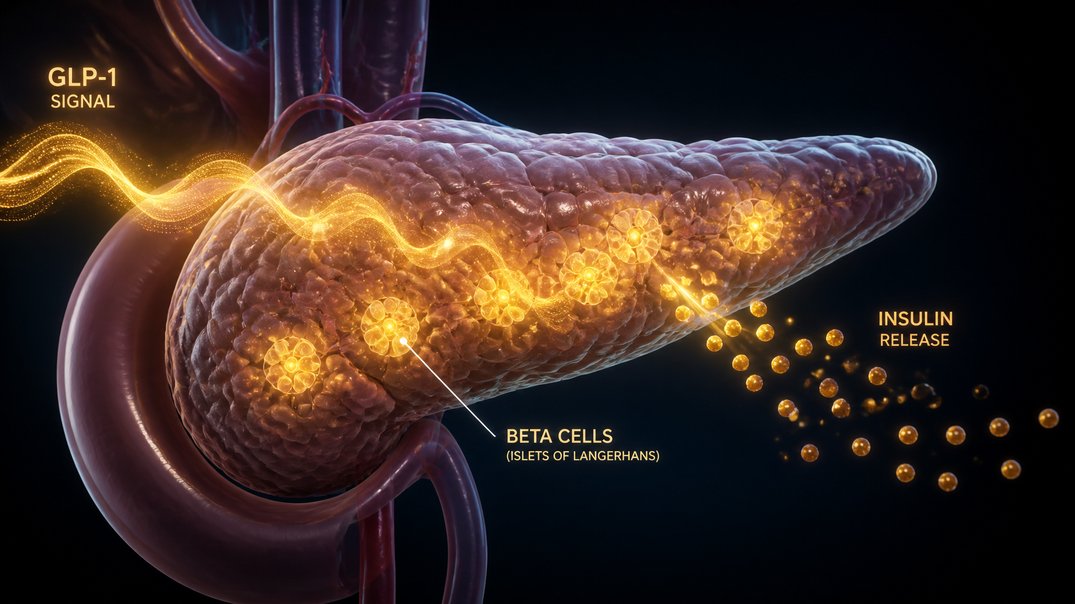
You can’t check your GLP-1 levels with a home test kit. Measuring them accurately requires a clinical blood draw under tightly controlled conditions — timed precisely around a meal, processed quickly to prevent degradation — and even then the results are rarely ordered in routine medical practice. So most people who have a blunted GLP-1 response never get a formal confirmation of that fact. What they get instead are symptoms: patterns of hunger, energy, cravings, and weight behavior that don’t respond the way they should to reasonable diet and lifestyle efforts. Recognizing those patterns is the practical substitute for a lab result most people will never have.
Hunger That Returns Too Soon After Eating
One of GLP-1’s primary jobs is extending the window of satiety after a meal. It slows gastric emptying so food lingers in the stomach longer, signals the brain that you’re full, and helps moderate the blood sugar trajectory that influences when hunger returns. When GLP-1 output is blunted, that satiety window shrinks.
The telltale pattern is feeling genuinely hungry — not just mildly interested in food, but physically hungry — within an hour or two of finishing a substantial meal. If you regularly eat what should be an adequate meal and find yourself hungry again before you’d reasonably expect to be, a weak GLP-1 response is one of the more likely biological explanations. This is particularly telling if the meal included reasonable amounts of protein and fiber, which are the strongest natural stimulators of GLP-1 release. A high-protein, high-fiber meal should produce a strong, sustained GLP-1 response. If it doesn’t keep you full, the system may not be working as well as it should.
The Difference Between Habit Hunger and Hormonal Hunger
It’s worth distinguishing between hunger driven by habit or boredom and hunger driven by hormonal signaling. Habitual hunger tends to appear at predictable times regardless of what or when you last ate. Hormonal hunger driven by a weak GLP-1 response feels more physical — a genuine sensation of emptiness — and tends to arrive earlier than expected after eating. It’s also often accompanied by the other signs described in this article, rather than appearing in isolation.
Strong Cravings, Especially for Sugary or High-Fat Foods
GLP-1 receptors are present in the brain’s reward circuitry, not just the hunger-regulating hypothalamus. When GLP-1 binds to these receptors after a meal, it dampens the reward response to food — making highly palatable foods less compelling and reducing the drive to eat past fullness. As covered in How GLP-1 Controls Your Appetite, this is part of why prescription GLP-1 drugs are so effective at reducing what users describe as “food noise.”
When the GLP-1 signal is weak, this dampening effect is reduced. The reward system remains more fully activated, and cravings — particularly for the high-fat, high-sugar foods that most strongly activate that system — are harder to resist. If you find that cravings feel disproportionately powerful, that you frequently want something sweet shortly after a full meal, or that food occupies more mental real estate than you’d like, a blunted GLP-1 reward response may be contributing.
Energy Crashes After Meals
Post-meal energy crashes — the familiar afternoon slump after lunch, or the heavy fatigue that can follow a large meal — are commonly attributed to blood sugar fluctuation. That attribution is largely correct, and GLP-1 is directly involved in the mechanism.
When GLP-1 output after a meal is strong, blood sugar rises gradually, insulin responds proportionally, and the return to baseline is smooth. The result is stable energy. When GLP-1 output is weak, glucose can enter the bloodstream more rapidly, blood sugar spikes higher, insulin overshoots in response, and blood sugar drops quickly — sometimes to levels that trigger fatigue, difficulty concentrating, and renewed hunger. This spike-and-crash pattern is a hallmark of impaired post-meal GLP-1 function.
If you consistently feel significantly more tired or foggy after meals than you’d expect, and particularly if that fatigue arrives 60 to 90 minutes after eating and is accompanied by renewed hunger, blood sugar dysregulation driven by weak GLP-1 signaling is worth considering. For a detailed look at how GLP-1 keeps post-meal blood sugar stable, see How GLP-1 Regulates Blood Sugar.
Difficulty Losing Weight Despite Reasonable Efforts
This is the sign that brings most people to this topic in the first place. If you’ve been eating carefully, exercising regularly, and still finding that weight loss is slower or harder than the math of calories in versus calories out would predict, hormonal factors are almost certainly part of the explanation — and GLP-1 is frequently among them.
A blunted GLP-1 response creates a persistent metabolic headwind. The satiety signal is weaker, so total calorie intake tends to be higher than it would be with normal GLP-1 function, even with disciplined eating. The reward system is less modulated, making it harder to stop eating at the right point. Blood sugar is less stable, driving more frequent hunger. And the cumulative effect of these hormonal disadvantages is a calorie balance that tilts toward storage rather than loss more easily than it should.
None of this excuses the role of diet and lifestyle choices — those matter enormously. But it does mean that two people eating the same diet can have meaningfully different outcomes based on their GLP-1 function, and that addressing GLP-1 output is a legitimate part of a comprehensive weight management strategy.
Weight That Concentrates in the Midsection
Visceral fat — the metabolically active fat that accumulates around the abdominal organs — is particularly associated with insulin resistance and blunted GLP-1 function. If excess weight tends to accumulate in your midsection rather than more evenly distributed, this is worth noting as a potential signal of the metabolic pattern that often accompanies reduced GLP-1 output. Visceral fat is also the form of fat most strongly associated with cardiovascular risk and type 2 diabetes, which is another reason addressing the underlying GLP-1 and insulin resistance picture matters beyond aesthetics.
Intense Hunger Before Meals
The hormone most associated with pre-meal hunger is ghrelin — the so-called hunger hormone that rises before eating and drops after. GLP-1 and ghrelin work in opposition, and a healthy post-meal GLP-1 response helps keep ghrelin suppressed for longer after eating. When GLP-1 output is weak and the satiety window is shorter, ghrelin rebounds more quickly, and pre-meal hunger tends to be more intense.
If you regularly experience what feels like urgent, almost unmanageable hunger before meals — particularly if meals arrive only a few hours after the last one — this ghrelin-GLP-1 imbalance may be at work. People with strong GLP-1 responses after meals typically experience pre-meal hunger as a gentle cue rather than an urgent demand. The intensity of pre-meal hunger is often a useful indirect indicator of how well the post-meal GLP-1 response is functioning.
Blood Sugar Symptoms: Shakiness, Irritability, and Brain Fog
Some people with impaired GLP-1 function experience more pronounced symptoms of blood sugar fluctuation — shakiness, irritability, difficulty concentrating, or a lightheaded feeling that arrives between meals or a couple of hours after eating. These symptoms reflect the glucose spike-and-crash pattern that weak GLP-1 signaling allows, and they can be disruptive enough to significantly affect daily functioning.
These symptoms don’t necessarily indicate diabetes or even prediabetes — they can appear in people with normal fasting blood sugar whose post-meal regulation is simply less smooth than it should be. A continuous glucose monitor, now available without a prescription, can be a revealing tool for anyone who wants to see their personal blood sugar patterns after different meals. What it often reveals in people with weak GLP-1 responses is a more volatile curve than they expected.
What to Do If These Signs Resonate
Recognizing a pattern that might reflect low GLP-1 function is the starting point, not the conclusion. None of the signs described here prove that GLP-1 is the issue — other factors can produce similar patterns, and a conversation with a healthcare provider is worthwhile if symptoms are significant. But the signs described above are consistent enough with blunted GLP-1 function that they warrant taking the natural support options seriously.
The most immediate dietary steps are increasing fiber and protein at every meal — these are the strongest natural stimulators of GLP-1 release and can produce noticeable improvements in satiety and blood sugar stability within days. Addressing sleep, stress, and physical activity over a longer time horizon can shift the baseline hormonal environment in a more favorable direction. And targeted supplements, particularly berberine, provide an additional layer of support with a meaningful evidence base behind them.
For the full evidence picture on berberine, see Berberine and GLP-1: What the Research Actually Shows. For a practical look at how long improvements in natural GLP-1 support typically take to produce noticeable results, see How Long Does It Take to Raise GLP-1 Naturally?