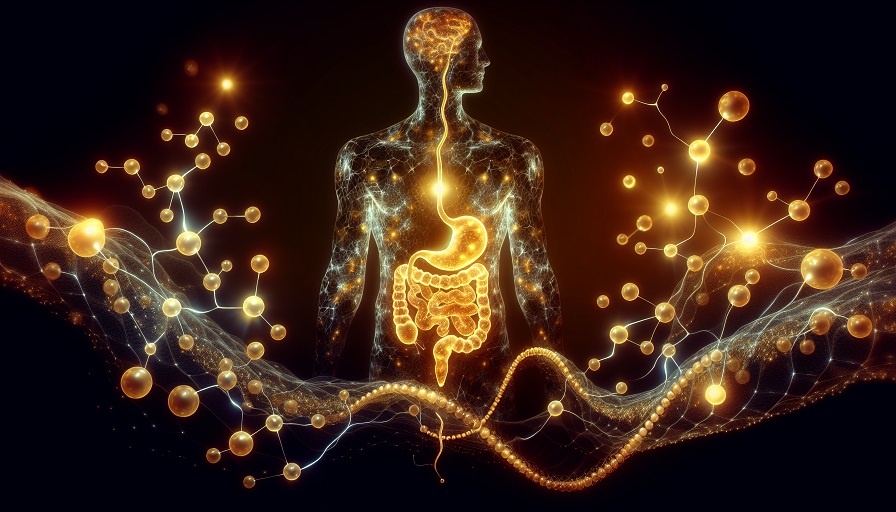
Blood sugar regulation sounds like a concern reserved for people with diabetes. In reality, it affects everyone — your energy levels, your concentration, your mood, and yes, your weight. At the center of that regulation is a hormone most people have never heard of until recently: GLP-1. While the conversation around GLP-1 tends to focus on appetite and weight loss, its role in blood sugar control is equally important and arguably more fundamental. Here’s how it works, why it matters even if you don’t have diabetes, and what you can do to support it naturally.
What Happens to Blood Sugar When You Eat
Every time you eat carbohydrates, your digestive system breaks them down into glucose, which enters your bloodstream. Blood sugar rises. Your pancreas detects the rise and releases insulin, a hormone that signals your cells to absorb that glucose for energy. Blood sugar comes back down. In a healthy metabolism, this process is smooth and well-regulated. In a compromised one, it’s bumpy — blood sugar spikes too high, insulin response is sluggish or excessive, and the aftermath leaves you tired, foggy, and hungry again sooner than you should be.
GLP-1 sits at the heart of this regulation. Released by your gut within minutes of eating, it acts as an early-warning system — alerting the pancreas that food is on the way and coordinating several mechanisms that collectively keep blood sugar from swinging too far in either direction.
The Incretin Effect: Why GLP-1 Matters More Than Most People Know
Here’s something that surprised researchers when they first discovered it: insulin release triggered by eating is significantly greater than insulin release triggered by an equivalent amount of glucose delivered directly into the bloodstream. In other words, your gut’s response to food amplifies your pancreas’s insulin output beyond what blood sugar alone would produce.
This phenomenon is called the incretin effect, and GLP-1 is responsible for a substantial portion of it. The gut essentially gives the pancreas advance notice, allowing insulin to be released faster and in greater amounts than the blood sugar signal alone would generate. In people with type 2 diabetes, this incretin effect is markedly reduced — and reduced GLP-1 output is a primary reason why.
How GLP-1 Keeps Blood Sugar Stable After Meals
GLP-1 regulates post-meal blood sugar through three distinct but complementary mechanisms. Understanding all three helps clarify why it’s such a valuable target for both prescription drugs and natural supplementation.
It Triggers Insulin Release — But Only When Needed
GLP-1 stimulates the beta cells of the pancreas to produce and release insulin. What makes this particularly valuable is that GLP-1 does this in a glucose-dependent manner — it only drives insulin release when blood sugar is actually elevated. When blood sugar is at a normal level, GLP-1’s insulin-stimulating effect essentially switches off.
This is a meaningful safety feature. Some diabetes medications force insulin release regardless of blood sugar level, which carries a risk of hypoglycemia — blood sugar dropping dangerously low. GLP-1’s built-in sensitivity to blood sugar makes that outcome far less likely. It responds proportionally to the problem rather than applying constant pressure.
It Suppresses Glucagon to Prevent Excess Sugar Release
While GLP-1 is prompting insulin release, it’s simultaneously suppressing glucagon — a hormone produced by the pancreas’s alpha cells that does the opposite of insulin. Glucagon signals the liver to convert stored glycogen into glucose and release it into the bloodstream. This is useful when blood sugar drops too low, but after a meal, when blood sugar is already rising, glucagon release is counterproductive.
GLP-1 puts glucagon on hold during the post-meal period, preventing your liver from adding more sugar to an already-elevated system. This dual action — more insulin, less glucagon — produces a more controlled blood sugar response than either effect would achieve alone.
It Slows the Rate at Which Sugar Enters Your Blood
The third mechanism is mechanical rather than hormonal. As covered in more detail in our article on How GLP-1 Controls Your Appetite, GLP-1 slows gastric emptying — the movement of food from your stomach into the small intestine, where digestion and glucose absorption occur. When that process slows down, glucose enters the bloodstream more gradually rather than in a sudden rush.
The practical effect is a flatter, more manageable blood sugar curve after meals. Instead of a sharp spike followed by a rapid drop, you get a gentler rise and a more gradual return to baseline. This is beneficial for energy, mood, and long-term metabolic health alike.
GLP-1 and Insulin Resistance: A Complicated Relationship
Insulin resistance is a condition in which your cells become less responsive to insulin’s signal to absorb glucose. The pancreas compensates by producing more insulin, but over time it struggles to keep up, and blood sugar control deteriorates. It’s the central feature of type 2 diabetes and a defining characteristic of metabolic syndrome.
GLP-1 doesn’t directly reverse insulin resistance, but it works around it in useful ways. By amplifying insulin release and suppressing glucagon, it helps the body achieve better blood sugar control even when insulin sensitivity is impaired. Some research also suggests that GLP-1 may support the health and survival of the pancreatic beta cells that produce insulin — cells that are progressively damaged in type 2 diabetes. This is an area of active research rather than settled science, but the early findings are promising.
For a more detailed look at the relationship between GLP-1 and insulin resistance, see GLP-1 and Insulin Resistance: Breaking the Cycle.
Why This Matters Even If You Don’t Have Diabetes
Blood sugar regulation isn’t a binary issue — you don’t simply have it under control or not. It exists on a spectrum, and many people who would never be diagnosed with diabetes still experience suboptimal blood sugar regulation that affects how they feel day to day.
Afternoon energy crashes, brain fog after meals, strong sugar cravings, difficulty concentrating in the late morning before lunch — these are often signs of blood sugar fluctuating more than it should. Supporting GLP-1 naturally, through diet, lifestyle, and targeted supplementation, can smooth out those fluctuations even in people whose blood sugar tests as normal. The benefits aren’t limited to those with a clinical diagnosis.
How Natural GLP-1 Support Can Help Blood Sugar
The same approaches that support GLP-1 for appetite control also support it for blood sugar regulation — the two are inseparable, since GLP-1 drives both simultaneously. Eating more dietary fiber slows glucose absorption and stimulates GLP-1 release. Prioritizing protein at meals enhances the incretin effect. Fermented foods and probiotic supplements support the gut microbiome, which plays a supporting role in GLP-1 secretion.
Among supplements, berberine has the strongest evidence base for blood sugar support and GLP-1 enhancement. A frequently cited study found that berberine lowered fasting blood sugar by roughly 20% in people with type 2 diabetes over three months — results comparable in some analyses to the diabetes drug metformin. For the full breakdown, see Berberine and GLP-1: What the Research Actually Shows and our dedicated comparison at Can Berberine Lower Blood Sugar as Effectively as Metformin?
Natural approaches to blood sugar regulation work best as part of a broader metabolic strategy — not as a substitute for medical care when it’s genuinely needed, but as a meaningful foundation for people looking to support their metabolism before problems develop, or alongside treatment when appropriate. If blood sugar management is your primary goal, the articles in our Blood Sugar and Metabolic Health category are the best place to continue.