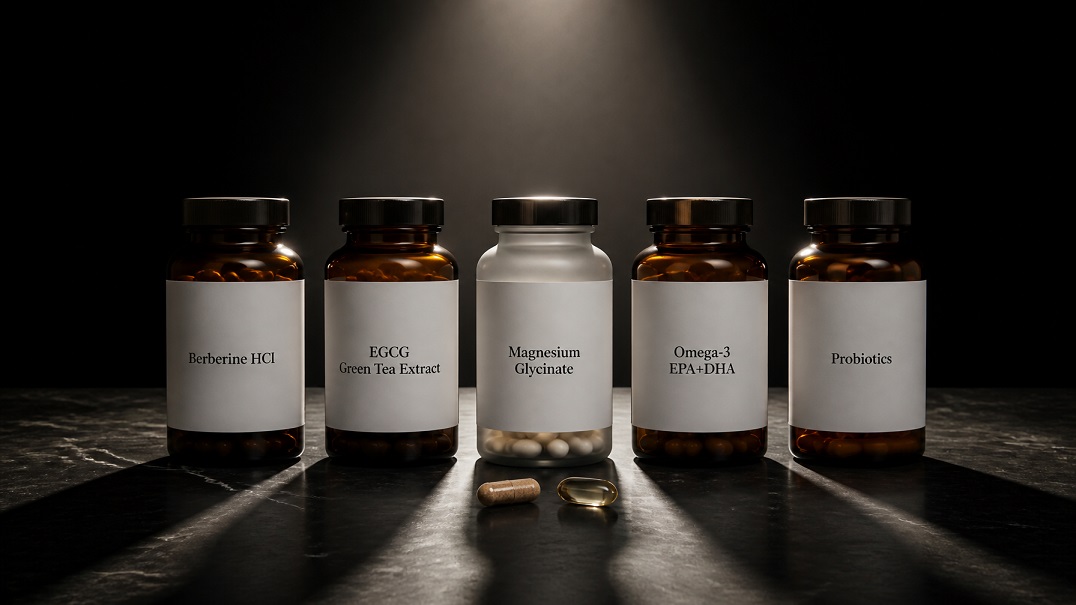
If you’ve spent any time researching natural GLP-1 support, you’ve probably noticed that most supplement websites are enthusiastic about benefits and vague about risks. That’s not how this site operates. Natural supplements can be genuinely useful, but “natural” doesn’t automatically mean safe for everyone in every situation — and some of the most effective supplements in this category come with real considerations worth understanding before you start.
This article gives you an honest, category-wide safety assessment. Not alarmist, not dismissive — just a clear picture of what the evidence shows about risks, who faces them, and what precautions actually matter.
The General Safety Picture
The good news first: the core natural GLP-1 supplements — berberine, soluble fiber, probiotics, green tea extract, omega-3s, magnesium — have well-established safety profiles at the doses used in clinical research. Most adults with no underlying health conditions and no prescription medications can use these supplements without significant concern.
That said, “generally safe” is not the same as “safe for everyone.” There are four situations where safety considerations become genuinely important: when you take prescription medications that interact with supplements, when you have specific health conditions that change how supplements affect you, when you take multiple supplements simultaneously, and when product quality is poor. Each of these deserves specific attention.
Supplement-Specific Safety Profiles
Berberine
Berberine has a good safety record at the standard dose of 500 mg three times daily, and clinical trials running up to six months at this dose have not raised serious safety signals for most adults.
The most common side effects are gastrointestinal: nausea, loose stools, constipation, or stomach cramping, particularly in the first one to two weeks. These typically resolve as the body adjusts and are minimized by starting at a lower dose and titrating up gradually.
The more important safety issue is drug interactions. Berberine is metabolized by liver enzymes in the CYP450 family, the same pathway used by many common medications. It can increase blood levels of drugs that use the same pathway, potentially pushing them above their therapeutic range. Medications of particular concern include cyclosporine (used in transplant patients), warfarin (a blood thinner), certain statins, and macrolide antibiotics like azithromycin.
The other significant interaction is with blood sugar medications. Berberine lowers glucose through AMPK activation and DPP-4 inhibition — the same territory as metformin and other diabetes drugs. Combining them without medical supervision can cause hypoglycemia (blood sugar dropping too low). If you take any glucose-lowering medication, discuss berberine with your prescribing doctor before starting. See Berberine Side Effects: What You Need to Know Before You Start for a full breakdown.
Berberine should be avoided during pregnancy and breastfeeding. Animal studies have raised concerns about fetal development, and there is insufficient human safety data to recommend it during these periods.
Psyllium Husk (Soluble Fiber)
Psyllium is one of the safest supplements in this category for most people. It’s a whole food-derived fiber that has been used safely for decades, and adverse effects at standard doses (10 to 15 grams per day) are rare.
The main side effects are digestive: bloating, gas, and loose stools, particularly when fiber intake increases rapidly. Starting with 5 grams per day and increasing gradually over two weeks, alongside adequate water intake, prevents most of these issues.
The important caution with psyllium is swallowing. Psyllium must always be taken with a full glass of water (at least 240 ml). It swells rapidly on contact with moisture and can cause choking or esophageal obstruction if swallowed dry or with insufficient liquid. This is especially important for people with difficulty swallowing.
Psyllium also slows the absorption of other medications and supplements taken at the same time. If you take thyroid medications, diabetes drugs, or any time-sensitive medication, take them at least one hour before or two to four hours after psyllium.
Probiotics
For healthy adults, probiotics have an excellent safety record. Side effects are uncommon and usually limited to temporary bloating or digestive changes as the gut microbiome adjusts.
The population that requires more caution is people who are immunocompromised — including those receiving chemotherapy, people on immunosuppressant medications after organ transplant, and people with HIV/AIDS. In these populations, live probiotic bacteria have (very rarely) been associated with bacteremia (bacteria entering the bloodstream). This is an uncommon event but a real one, and immunocompromised individuals should consult their doctor before taking probiotics.
People with small intestinal bacterial overgrowth (SIBO) — a condition where bacteria proliferate in the small intestine rather than the colon — may find probiotics worsen their symptoms rather than improve them. If you have a SIBO diagnosis or persistent unexplained bloating, work with a healthcare provider before adding probiotics.
Green Tea Extract (EGCG)
Green tea extract has a solid safety record at doses of 200 to 400 mg EGCG per day — the range used in most clinical research. The main side effects are nausea and stomach upset, which almost always occur when EGCG is taken on an empty stomach. Taking it with food eliminates this problem for most people.
The more serious concern is liver toxicity, which has been reported in rare cases associated with high-dose green tea extract supplementation — typically at doses well above 800 mg EGCG per day and often in products of uncertain quality. Staying within the 200 to 400 mg range from a reputable, third-party-tested product keeps this risk minimal. If you develop unexplained fatigue, yellowing of the skin, or dark urine while taking green tea extract, stop and see a doctor.
EGCG also has mild caffeine content in most products, which is worth noting for people who are caffeine-sensitive or who take green tea extract in the evening.
Omega-3 Fatty Acids
Fish oil at doses of 1,000 to 3,000 mg combined EPA and DHA per day is one of the most extensively studied supplements in existence, with a very strong safety record. The common side effects — fishy aftertaste, “fish burps,” and occasional loose stools — are manageable with quality products taken with food and stored properly to prevent oxidation.
The interaction most worth knowing: omega-3s have mild blood-thinning properties. At standard supplemental doses this rarely causes problems, but at doses above 3,000 mg EPA and DHA per day, or in combination with anticoagulant medications like warfarin or antiplatelet drugs like clopidogrel, bleeding risk may increase. Flag fish oil to any prescriber managing a clotting condition.
Oxidized fish oil is a real quality concern. Rancid fish oil may promote rather than reduce inflammation, defeating the purpose entirely. Buying from brands that third-party test for oxidation markers (peroxide value, anisidine value) matters more with fish oil than almost any other supplement.
Magnesium
Magnesium is generally very safe. The body’s primary defense against excess magnesium is the kidneys, which excrete surplus efficiently. The main side effect at higher doses is loose stools or diarrhea — which is why magnesium oxide (which absorbs poorly and stays in the gut) is sold as a laxative, while well-absorbed forms like glycinate and malate are preferred for supplementation without digestive disruption.
The significant exception is people with kidney disease. Impaired kidneys cannot excrete excess magnesium effectively, which can lead to magnesium accumulation and toxicity. People with chronic kidney disease or severely reduced kidney function should not supplement magnesium without medical supervision.
Risks That Apply Across the Category
Blood Sugar Stacking
Several natural GLP-1 supplements lower blood sugar through independent mechanisms: berberine, chromium, cinnamon extract, inositol, and to a lesser extent ginseng. Taking multiple glucose-lowering supplements simultaneously produces a cumulative effect that can push blood sugar lower than intended — particularly after meals or during fasting.
For people without diabetes who are eating adequate carbohydrates, this is unlikely to cause symptomatic hypoglycemia. But for people who are also restricting carbohydrates, doing prolonged fasting, or taking prescription diabetes medications, the combined effect can become meaningful. Monitor how you feel after meals when adding multiple blood-sugar-active supplements, and be alert to symptoms of low blood sugar: shakiness, sweating, confusion, or unusual fatigue between meals.
Product Quality and Contamination
The supplement industry in the United States is regulated less strictly than pharmaceutical drugs. Manufacturers are not required to prove safety or efficacy before selling a product, and quality control varies widely. This creates real risks: products that don’t contain what the label claims, products contaminated with heavy metals or undisclosed pharmaceutical compounds, and products with ingredients at doses far below or above what’s stated.
Third-party testing by organizations like USP, NSF International, or ConsumerLab addresses this risk. Products carrying these certifications have been independently verified for purity, potency, and accuracy of labeling. For supplements you plan to take daily over months, this matters. See Third-Party Testing in Supplements: Why It Matters and What to Look For for what to look for.
Interactions with Medications
Beyond berberine’s CYP450 interactions, several other supplements in this category can affect drug metabolism or have additive effects with common medications. The most relevant are blood thinners (warfarin, aspirin, clopidogrel) with fish oil and high-dose curcumin; thyroid medications with psyllium; and any glucose-lowering medication with berberine, chromium, or inositol.
A practical approach: bring a list of your supplements to your next appointment and ask your prescribing doctor or pharmacist to flag any interactions. Pharmacists are often underused for this purpose and can check interactions quickly against your medication list.
Who Should Be Especially Careful
Certain groups face higher risk and should consult a healthcare provider before starting any supplement in this category.
People with type 1 or type 2 diabetes on medication face the greatest interaction risk. Blood sugar-lowering supplements combined with insulin or oral medications can cause hypoglycemia that requires medical attention.
People who are pregnant or breastfeeding should avoid berberine specifically, and approach all supplements with caution given the limited safety data in these populations.
People with liver disease should be cautious with high-dose EGCG and berberine, both of which are metabolized hepatically.
People with kidney disease should be cautious with magnesium and with high-dose supplementation generally, since impaired kidneys affect how many compounds are cleared from the body.
People taking immunosuppressant medications — particularly cyclosporine, which interacts directly with berberine — should not add berberine without their transplant team’s knowledge.
Practical Takeaway: Safe for Most, With Known Exceptions
The natural GLP-1 supplement category has a genuinely good safety record for healthy adults who are not on medications that interact with these compounds. The risks are real but manageable — mostly a matter of knowing your own health situation, choosing quality products, and avoiding the trap of assuming more supplements means more benefit.
The single most protective thing you can do is tell your doctor what you’re taking. Not to ask permission, but because they can flag interactions you might not know to look for. A quick conversation — or a message through your patient portal — is worth the few minutes it takes.
For guidance on which supplements to prioritize and how to combine them intelligently, see The Best Supplement Stack for Natural GLP-1 Support and Combining Berberine with Other GLP-1 Boosting Supplements.