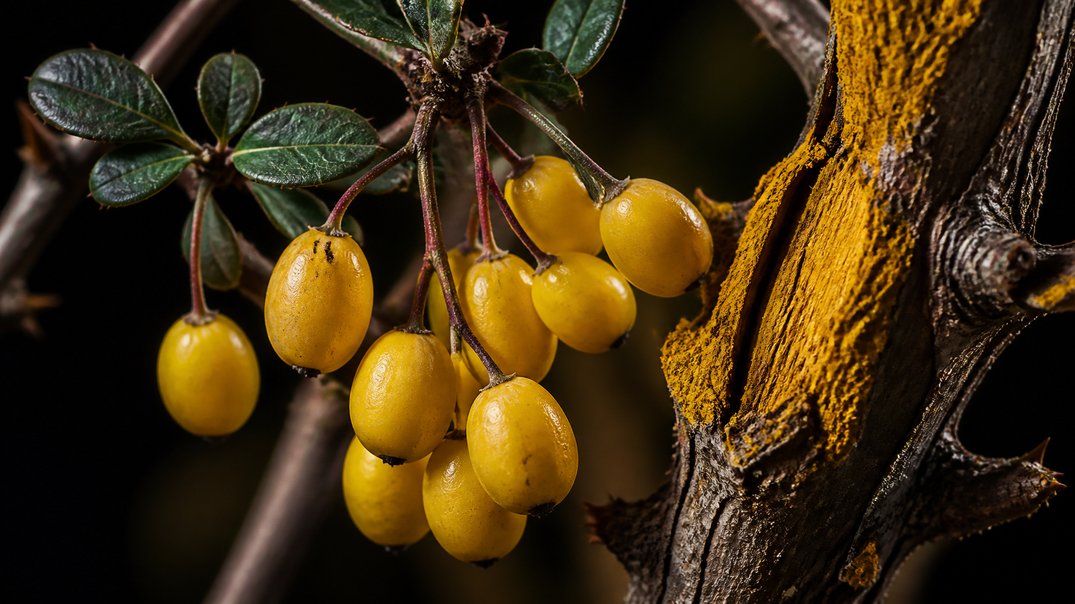
Berberine has become one of the most popular metabolic supplements on the market, which means the shelves — physical and digital — are crowded with products ranging from rigorously formulated to barely functional. The core problem is that berberine’s reputation is strong enough that manufacturers can put the word on a label and sell it, regardless of whether the dose, form, or quality makes the product likely to work. Knowing what to look for before you buy separates the products worth your money from the ones riding the berberine wave without delivering the goods.
Start with the Form: Berberine HCl Is the Standard
The first thing to establish when evaluating any berberine supplement is the chemical form of berberine it contains. This information should appear in the Supplement Facts panel, listed as “Berberine (as berberine HCl)” or similar.
Berberine HCl — berberine hydrochloride — is the salt form of berberine and the form used in virtually all human clinical trials, including the landmark 2008 Metabolism study (1,500 mg/day, three months, fasting blood sugar down ~20%, post-meal blood sugar down ~26%), the PCOS trials comparing berberine to metformin, and the lipid meta-analyses showing reductions in LDL, triglycerides, and total cholesterol. When the research says “berberine,” it almost always means berberine HCl.
Some products simply list “berberine” without specifying the salt form. This is less informative but not automatically a red flag — most commercial berberine is berberine HCl. The problem arises when manufacturers use other forms without disclosing the difference, or when marketing claims reference clinical trial results that were conducted with berberine HCl while the product contains a different form.
Newer forms — particularly dihydroberberine — claim significantly higher bioavailability than standard berberine HCl and are sometimes marketed at lower doses (100–200 mg per serving versus 500 mg for berberine HCl). The bioavailability claims for dihydroberberine have some supporting evidence, but the volume of human trial data for dihydroberberine specifically is far smaller than for berberine HCl. Products using dihydroberberine and citing berberine HCl clinical trial results are referencing evidence from a different compound at a different dose — worth being aware of when evaluating. Our article on the best forms of berberine compares the options in detail.
Check the Dose: Do the Math Before You Buy
The dose used in the clinical trial evidence for berberine is 1,500 mg per day, taken as 500 mg three times daily with meals. This is the dose at which the significant blood sugar, lipid, and metabolic effects have been demonstrated. Products dosed below this level may provide some benefit, but you’re extrapolating below the studied range.
To verify dose, look at the Supplement Facts panel:
- What is the amount of berberine HCl per serving?
- What is the recommended serving frequency per day?
- Do those numbers multiply to 1,500 mg daily?
A product listing 500 mg per capsule with a recommendation of one capsule three times daily reaches the target. A product listing 250 mg per capsule with a once-daily recommendation provides 250 mg/day — one-sixth of the studied dose, regardless of how prominently berberine is featured on the front of the label.
Also verify how many days a bottle lasts at the correct dose. A bottle with 60 capsules at 500 mg each lasts 20 days when taken three times daily — not a month. Price per day at therapeutic dose is the meaningful cost comparison, not price per bottle or even price per capsule.
Watch for Proprietary Blends That Hide Berberine’s Actual Dose
One of the most common ways berberine products underdeliver is through proprietary blends — combinations of multiple ingredients listed under a single total weight with individual amounts undisclosed. A label might read “Metabolic Support Blend: 800 mg (berberine HCl, chromium picolinate, cinnamon extract, alpha-lipoic acid)” without revealing how much of that 800 mg is actually berberine.
If even half of the blend is berberine, that’s 400 mg per serving — below the therapeutic single-dose target of 500 mg, let alone the daily target of 1,500 mg. The other ingredients may add modest value, but not if their inclusion reduces berberine to a sub-therapeutic amount. Proprietary blends in berberine supplements are a meaningful red flag specifically because berberine’s clinical efficacy depends on reaching the studied dose.
Single-ingredient berberine products are the easiest to evaluate — you know exactly what you’re getting and at what dose. Multi-ingredient formulas can be worthwhile if they’re fully transparent about the amount of each component, but require more scrutiny than single-ingredient options.
Bioavailability: The Honest Truth About Berberine Absorption
Berberine has notoriously poor oral bioavailability — less than 5% of a standard berberine HCl dose reaches systemic circulation in measurable amounts. This sounds alarming, but it doesn’t mean berberine doesn’t work. Several of berberine’s most important effects — on GLP-1 secretion from gut cells, gut microbiome composition, and gut barrier integrity — happen locally in the gut rather than requiring systemic absorption. The AMPK-activating effects in the liver and other tissues do require systemic absorption, but berberine appears to reach these tissues at sufficient concentrations despite low measured plasma levels.
That said, several strategies may modestly improve absorption for the systemic effects:
- Taking berberine with food, particularly a meal containing some fat, improves absorption compared to taking it fasted
- Some products include piperine (black pepper extract) to enhance berberine absorption — piperine famously increases curcumin bioavailability ~2,000% and has some evidence for improving berberine absorption as well, though the magnitude of effect is less dramatic than with curcumin
- Divided dosing (three times daily rather than once daily) may improve total daily absorption by avoiding saturation of the absorption pathways that handle any single dose
Products claiming dramatically enhanced bioavailability through novel delivery systems — nanoparticle formulations, liposomal delivery, phospholipid complexes — may have some merit, but most lack robust human clinical data to support the magnitude of absorption improvement claimed. Stick with berberine HCl at the standard therapeutic dose taken with meals unless you have specific reason to pursue a novel delivery form.
Third-Party Testing: The Verification That Matters Most
Because the FDA doesn’t verify supplement contents before products reach the market, third-party testing is the most important quality signal for any berberine supplement. An independent laboratory analyzes the actual product and verifies that it contains what the label claims, in the stated amounts, without contaminants (heavy metals, pesticides, microbial contamination).
Look for certification from recognized testing organizations:
- USP Verified — tests identity, potency, purity, and dissolution
- NSF Certified for Sport — rigorous testing for label accuracy and contaminants
- ConsumerLab.com Approved — independent testing with publicly available results
- Informed Sport / Informed Choice — batch-tested for label accuracy and banned substances
For berberine specifically, third-party testing is particularly valuable because the active ingredient is a plant alkaloid extracted from sources like Berberis aristata (Indian barberry) or Coptis chinensis (goldenseal). The extraction and purification process matters for both potency and purity — berberine sourced and processed without quality controls can contain inconsistent alkaloid concentrations or contaminants from the plant source. Third-party verification provides assurance that the extraction and standardization have been done reliably.
Our article on third-party testing in supplements covers the full landscape of what testing organizations check and how to interpret their certifications.
Capsule vs. Tablet vs. Powder: Does It Matter?
For berberine, the delivery format matters less than the dose and form, but a few practical points are worth knowing.
Capsules are the most common format and generally preferred: they protect the berberine from oxidation, dissolve predictably in the stomach, and allow clean dose splitting if needed. Vegetable capsules (HPMC) are preferable for anyone avoiding animal products.
Tablets are acceptable but require binders and may dissolve more slowly than capsules. If a tablet doesn’t disintegrate properly in the stomach, bioavailability suffers regardless of how much berberine it contains. Third-party testing that includes dissolution testing (USP verification covers this) provides assurance that the tablet actually breaks down appropriately.
Berberine powder in bulk form is the most cost-effective option and allows precise dose adjustment, but requires accurate measuring and is harder to take with meals on the go. It also has an intensely bitter taste that most people find unpleasant without encapsulation. For most people, capsules offer the best balance of convenience, dose accuracy, and palatability.
Sourcing and Manufacturing Standards
Berberine is extracted from several plant sources, and the quality of the raw material and extraction process influences both potency and purity. Look for products that disclose their berberine source and specify the alkaloid percentage or standardization level.
GMP (Good Manufacturing Practice) certification is a baseline manufacturing quality standard for supplements in the US — FDA-registered GMP facilities are required to follow standardized manufacturing, testing, and documentation procedures. Products manufactured in GMP-certified facilities have a meaningful quality baseline above products manufactured without oversight. Look for “manufactured in a GMP facility” or “FDA-registered facility” on the label or product description.
Country of origin matters for some consumers and some contexts. Most commercial berberine is sourced from China, where the primary plant sources (Coptis chinensis) are cultivated. This isn’t inherently problematic, but it does place premium importance on third-party testing to verify purity and heavy metal content, since agricultural practices vary. Berberine sourced from domestic or European sources with transparent supply chains may be available at a premium for consumers who prioritize this.
Price as a Quality Signal — With Important Caveats
Berberine is a commodity ingredient, and significant price variation exists in the market. Very cheap berberine products — under $10–15 for a month’s supply at therapeutic dose — are worth scrutinizing carefully. At those price points, corners are likely being cut somewhere: sourcing quality, manufacturing standards, third-party testing, or actual berberine content. A mid-range, transparently labeled product from a manufacturer with third-party verification will typically outperform a cheap product with impressive-sounding marketing claims.
At the same time, expensive berberine products don’t automatically justify their price through better quality. Premium pricing often reflects marketing spend, packaging, or branded novel delivery forms rather than meaningfully superior berberine. A well-formulated berberine HCl product from a reputable manufacturer with third-party certification should cost roughly $25–50 for a 30-day supply at therapeutic dose — significantly above the cheapest options but not at luxury supplement pricing.
A Practical Berberine Buying Checklist
Before purchasing any berberine supplement, run through these questions:
- Does the Supplement Facts panel specify berberine HCl as the form?
- Does the math work out to 1,500 mg of berberine per day at the recommended serving frequency?
- How many days does the bottle last at 500 mg three times daily? What is the actual cost per day?
- Is this a single-ingredient or transparent formula, or a proprietary blend hiding individual amounts?
- Is there third-party testing certification from USP, NSF, ConsumerLab, or Informed Sport?
- Is the product manufactured in a GMP-certified facility?
- Does the price reflect the above quality markers, or does it fall in the suspiciously cheap range?
A berberine product that passes this checklist — correct form, full therapeutic dose, transparent formulation, third-party verified, GMP manufactured, reasonably priced — is worth taking seriously. One that fails multiple criteria may still contain some berberine and produce some benefit, but you’re buying uncertainty rather than confidence. Given that berberine’s clinical evidence depends on reaching the studied dose consistently over months, investing in a verified, properly dosed product is worth the modest premium over cheaper alternatives.