Something shifts metabolically around 40 for many women — and it’s not imagined. Estrogen begins its long decline, insulin sensitivity quietly erodes, and the gut signals that once kept appetite in check become less reliable. GLP-1, the hormone your gut releases after meals to regulate blood sugar and signal fullness, is directly affected by these changes. The natural GLP-1 boosters that work best for women over 40 aren’t necessarily different from what works in general — but the priority order changes, and some options become more relevant than others given what’s actually happening hormonally. Here’s an evidence-based ranking with the specifics women in this phase of life need.
Why Women Over 40 Need a Different GLP-1 Approach
The metabolic changes that begin around 40 aren’t subtle once you understand the biology. Estrogen, which actively supports GLP-1 secretion from gut L-cells, starts declining in the perimenopause years. Post-meal GLP-1 responses weaken, meaning meals produce less of the fullness signal they used to. Insulin sensitivity declines independently, so whatever glucose does enter the blood after meals is managed less efficiently.
At the same time, sleep quality often worsens during perimenopause — hot flashes, anxiety, and hormonal fluctuations all disrupt sleep — and poor sleep independently impairs appetite regulation and insulin function. Muscle mass starts declining more noticeably without deliberate resistance training, reducing the body’s glucose-clearing capacity. Cortisol reactivity can increase, adding another metabolic stressor that GLP-1 has to work against.
The result is a system where GLP-1’s natural braking effect on appetite and blood sugar is weaker precisely when metabolic demands are higher. Natural GLP-1 support for women over 40 needs to address both sides: stimulate more GLP-1 output and reduce the metabolic burden GLP-1 is being asked to manage.
The Best Natural GLP-1 Boosters for Women Over 40: Ranked by Evidence
1. Dietary Protein — The Most Reliable GLP-1 Trigger
Before any supplement, dietary protein earns the top position because it is the strongest, most consistent, and most immediate GLP-1 stimulator available. Amino acids from protein directly trigger L-cells in the gut to release GLP-1 — and the effect scales with dose. A meal with 30–40g of protein produces a meaningfully stronger GLP-1 response than one with 10–15g.
For women over 40, protein serves a second purpose beyond GLP-1: it preserves muscle mass. Estrogen decline accelerates muscle loss, and without adequate protein intake and resistance training, muscle mass falls progressively through the perimenopausal years. Since muscle is the body’s primary site of insulin-stimulated glucose uptake, losing it worsens insulin resistance — which in turn makes the GLP-1 problem worse.
Aim for 25–40g per meal across three meals. Eggs, Greek yogurt, cottage cheese, fish, poultry, and legumes are the most practical daily sources. This is not a minor dietary tweak — it’s the foundation everything else builds on.
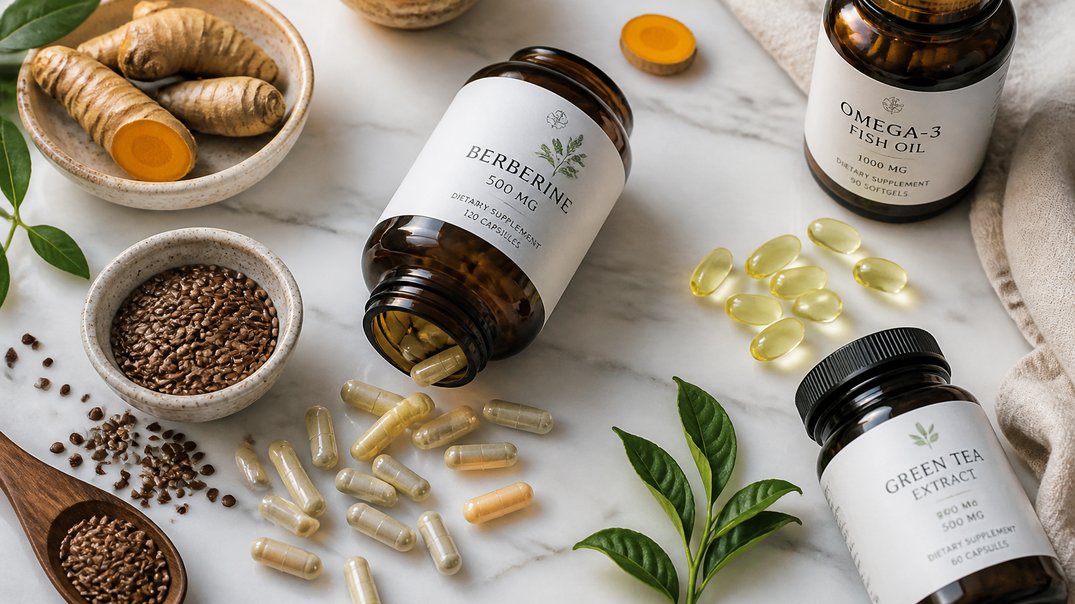
2. Berberine — The Strongest Supplement Evidence for Midlife Metabolism
Berberine is the natural supplement with the most robust human trial evidence for the metabolic problems most common in women over 40. It activates AMPK — the cellular enzyme that improves insulin sensitivity — and appears to stimulate GLP-1 secretion from gut cells directly. Two mechanisms, one supplement.
The landmark 2008 trial published in Metabolism found that 1,500 mg/day for three months reduced fasting blood sugar by approximately 20% and post-meal blood sugar by 26% — results comparable to metformin. For women with PCOS, berberine has direct trial evidence showing reductions in testosterone, improved menstrual regularity, and insulin sensitivity gains matching pharmaceutical comparators.
For perimenopausal women without PCOS, the insulin-sensitizing effect remains highly relevant. As GLP-1 activity weakens and estrogen’s direct insulin-sensitizing support fades, berberine steps in through the AMPK pathway to keep cells responding to insulin more efficiently. The standard dose is 500 mg three times daily with meals. Women on thyroid medications, oral contraceptives, or metformin should check for interactions before starting. Our full guide on berberine and hormonal balance for women covers the interaction landscape in detail.
3. Soluble Fiber — The Gut-Level GLP-1 Engine
Soluble fiber works on GLP-1 through a pathway distinct from protein: gut bacteria ferment it into short-chain fatty acids (SCFAs) — butyrate, propionate, and acetate — that directly stimulate L-cells in the colon to release GLP-1. This is a sustained, meal-independent stimulus that keeps GLP-1 production supported between as well as during meals.
For women over 40, fiber intake also supports the gut microbiome, which changes during perimenopause in ways that reduce beneficial SCFA-producing bacteria. Prioritizing soluble fiber — oats, legumes, flaxseed, chia seeds, apples, psyllium husk — actively counters this shift. The target is 25–35g of total fiber daily, weighted toward soluble sources.
Psyllium husk deserves specific mention as a supplement option. Five to ten grams taken with water before one or two main meals provides a concentrated soluble fiber dose precisely when it’s most useful — slowing digestion and stimulating GLP-1 at the point where post-meal blood sugar management matters most. It’s inexpensive, well-tolerated by most women, and has a strong evidence base for both GLP-1 support and blood sugar management.
4. Magnesium — The Perimenopausal Essential
Magnesium earns a high position on this list specifically for women over 40 because of the estrogen-magnesium connection. Estrogen helps the kidneys retain magnesium; as estrogen declines, magnesium excretion increases. Combined with the fact that an estimated 45–68% of Americans already fall short of the recommended daily intake, many perimenopausal women are running a meaningful magnesium deficit without knowing it.
Low magnesium worsens insulin resistance, disrupts sleep quality, amplifies cortisol reactivity, and increases anxiety — all problems that compound during perimenopause. Magnesium doesn’t stimulate GLP-1 directly, but it supports the metabolic and hormonal environment in which GLP-1 operates. Supplementing with magnesium glycinate at 200–400 mg in the evening addresses multiple perimenopausal complaints simultaneously.
Glycinate is the preferred form for women over 40 because it’s gentle on the gut (unlike magnesium oxide, which often causes loose stools) and has the best evidence for improving sleep quality — a particularly valuable secondary benefit during perimenopause.
5. Omega-3 Fatty Acids — Inflammation, GLP-1, and Cardiovascular Protection
Omega-3 fatty acids from fish oil become increasingly relevant after 40 for reasons that go beyond GLP-1 support. Estrogen has cardiovascular and anti-inflammatory protective effects that begin declining during perimenopause. Systemic inflammation rises, insulin resistance worsens, and cardiovascular risk increases — all areas where omega-3s have meaningful evidence.
From a GLP-1 perspective, several human studies show that regular omega-3 supplementation modestly improves GLP-1 secretion and insulin sensitivity. The effect size is smaller than berberine’s, but omega-3s contribute to the same metabolic direction through a different mechanism, making them a useful addition to a supplement stack rather than a standalone solution.
The evidence-supported dose is 2–3g of combined EPA and DHA daily. Quality matters — look for a product that specifies EPA and DHA content (not just total fish oil), has been third-party tested for oxidation and heavy metals, and is stored refrigerated to prevent rancidity. Taking it with a meal that contains fat improves absorption.
6. Probiotics — Supporting the GLP-1 Microbiome
The gut microbiome is the engine behind soluble fiber’s GLP-1 benefits — it’s the bacteria that convert fiber into the SCFAs that stimulate L-cells. Perimenopause alters gut microbiome composition in ways that reduce populations of beneficial SCFA-producing bacteria. This is one reason why the same dietary fiber intake produces less GLP-1 benefit in older women than in younger ones.
Probiotic supplementation — particularly strains from the Lactobacillus and Bifidobacterium families — helps maintain the microbial populations most important for SCFA production and GLP-1 support. A product with multiple strains, at least 10–20 billion CFUs, and third-party verification of live cultures is worth looking for. Fermented foods — yogurt, kefir, kimchi, sauerkraut — provide a dietary alternative or complement to supplement probiotics.
7. Green Tea Extract (EGCG)
Green tea extract standardized for EGCG (epigallocatechin gallate) has human trial evidence for modestly improving GLP-1 secretion, improving insulin sensitivity, and supporting weight management through mild thermogenic effects. It’s not a high-magnitude intervention, but it contributes to the same metabolic direction as the other options on this list through its own distinct pathway — EGCG inhibits DPP-4, the enzyme that breaks down GLP-1, potentially extending how long each pulse of GLP-1 stays active.
The target dose is 200–400 mg of EGCG daily from a standardized extract. Women who are sensitive to caffeine or already struggling with perimenopausal sleep disruption should opt for a decaffeinated EGCG extract or drink brewed green tea (which contains less EGCG per serving but is well-tolerated). Our article on green tea extract, EGCG, and GLP-1 covers the science in more detail.
What Doesn’t Make the Priority List — and Why
Some supplements appear frequently in women’s health marketing but have limited specific relevance to GLP-1 support for women over 40. Collagen supplements, for example, have benefits for skin and joint health but no meaningful GLP-1 evidence. Maca root is commonly marketed for perimenopausal hormone balance but lacks robust human trial evidence for metabolic outcomes. Evening primrose oil is popular for perimenopausal symptoms but hasn’t been shown to affect GLP-1 or insulin sensitivity in meaningful ways.
This doesn’t make them useless for other purposes — it just means they’re not the right tools for the metabolic job described here. Focusing supplement spending on what has actual evidence for GLP-1 and insulin sensitivity produces better outcomes than spreading it across a wider array of less well-supported options.
Lifestyle Factors That Determine How Well Natural GLP-1 Support Works
No supplement stack produces its best results on top of a lifestyle working against it. Two factors have the most outsized impact on GLP-1 effectiveness for women over 40.
Resistance training is non-negotiable. Two to three sessions per week of progressive resistance exercise preserves the muscle mass that estrogen decline erodes, maintains the glucose-clearing capacity that keeps insulin demands reasonable, and activates AMPK in muscle cells — the same pathway berberine targets pharmacologically. Women who add resistance training to a natural GLP-1 supplement protocol consistently see better outcomes than those using supplements alone.
Sleep protection matters more than most women realize. A single night of significantly disrupted sleep measurably reduces insulin sensitivity the following day. Chronic perimenopausal sleep disruption sustains elevated cortisol and impairs appetite hormone regulation in ways that blunt GLP-1’s effectiveness regardless of what else you’re doing. Magnesium glycinate at bedtime, consistent sleep timing, a cool and dark sleep environment, and reduced alcohol (which fragments sleep architecture despite initially feeling sedating) all support the sleep quality that makes everything else work better.
Building Your GLP-1 Support Protocol After 40
The most practical approach is sequential: start with what has the greatest impact and lowest barrier, then add layers. Week one, focus on protein — hit 25–40g per meal consistently. Week two, add fiber targets and psyllium husk if needed. Week three, introduce berberine at 500 mg once daily and build to three times daily over two to three weeks. Add magnesium glycinate in the evening from the start if sleep is already a concern. Omega-3s and probiotics can be added as a second tier once the foundation is established.
Give the full protocol 10–12 weeks before evaluating results. Track hunger patterns, post-meal energy, clothing fit, and fasting blood sugar if you have a glucometer. If your doctor will run a fasting insulin panel before and after, that’s the most informative single marker for whether the strategy is moving insulin resistance in the right direction. The goal isn’t dramatic weight loss — it’s a metabolic recalibration that makes weight management more sustainable and energy more stable through one of the most hormonally demanding transitions in a woman’s life.