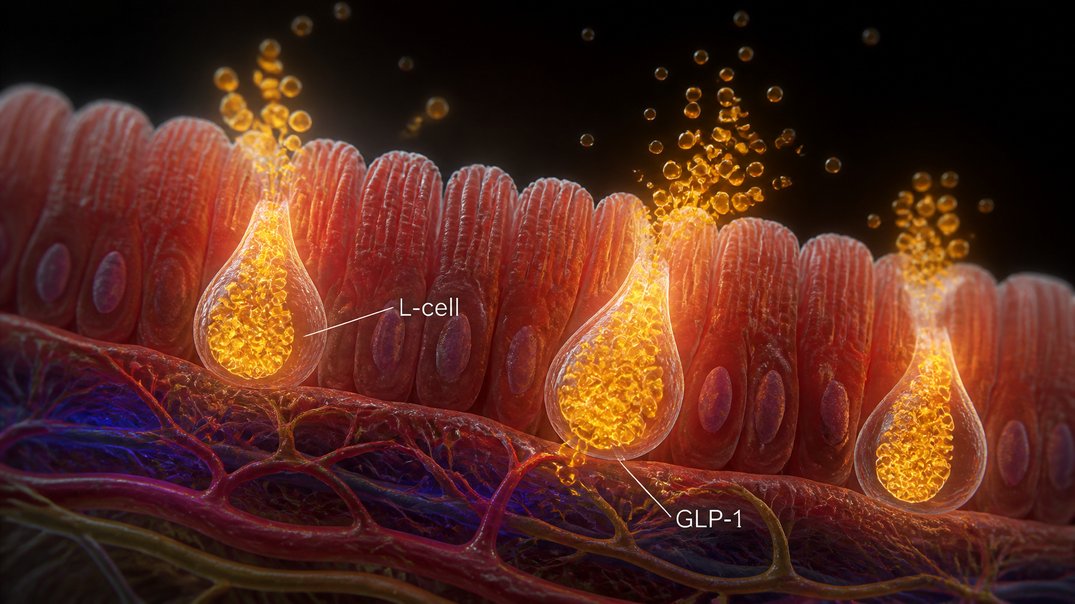
If you’ve been struggling with persistent hunger, blood sugar swings, or stubborn weight despite reasonable efforts, your GLP-1 response may be part of the explanation. Research has established clearly that some people produce significantly less GLP-1 after meals than others — or respond to it less effectively — and that this difference has real consequences for appetite, metabolism, and body weight. Understanding what drives a blunted GLP-1 response is the first step toward doing something about it. Several of the causes are more within your control than you might expect.
Obesity and Insulin Resistance: A Self-Reinforcing Problem
The most well-documented cause of reduced GLP-1 output is obesity itself, which creates a frustrating circular relationship. People with obesity consistently show a blunted post-meal GLP-1 response compared to lean individuals — meaning their L-cells release less GLP-1 after eating, the satiety signal reaching the brain is weaker, and hunger returns sooner. This makes overeating easier, which worsens obesity, which further impairs GLP-1 function.
Insulin resistance — the condition in which cells become less responsive to insulin’s signal to absorb glucose — compounds the problem. Insulin resistance and reduced GLP-1 output tend to travel together, each reinforcing the other. The incretin effect, whereby GLP-1 amplifies the pancreas’s insulin response after meals, is significantly diminished in people with type 2 diabetes and those with significant insulin resistance. As detailed in How GLP-1 Regulates Blood Sugar, this reduced incretin effect is one of the core mechanisms behind poor blood sugar control in type 2 diabetes.
Which Comes First?
Researchers have debated whether reduced GLP-1 output is a cause or a consequence of obesity and insulin resistance. The current evidence suggests it’s genuinely bidirectional. Some people may have a constitutionally lower GLP-1 response that predisposes them to weight gain and metabolic dysfunction. In others, years of dietary patterns and weight gain appear to progressively blunt a GLP-1 response that was once more robust. The practical implication either way is the same: improving GLP-1 output is a meaningful target for metabolic improvement.
A Diet Built Around the Wrong Foods
What you eat has a direct and significant effect on how much GLP-1 your gut produces. As explained in How Your Body Produces GLP-1 Naturally, the strongest dietary stimulators of GLP-1 release are soluble fiber, protein, and long-chain healthy fats. A diet consistently low in these nutrients and high in refined carbohydrates produces a chronically weak GLP-1 response after every meal.
Ultra-processed foods deserve particular attention here. They are typically engineered to be rapidly absorbed in the upper small intestine, before food reaches the L-cell-dense regions of the lower gut where GLP-1 production is strongest. They contain little of the fermentable fiber that gut bacteria need to produce the short-chain fatty acids that stimulate L-cells. And they tend to disrupt the gut microbiome over time in ways that further impair GLP-1 secretion. The modern Western diet, in other words, is remarkably well-designed — entirely by accident — to suppress natural GLP-1 output.
The Ultra-Processed Food Trap
There is also a behavioral dimension to this problem that makes it self-perpetuating. Because ultra-processed foods produce a weaker GLP-1 response and therefore a shorter satiety window, they tend to drive greater overall calorie intake. Hunger returns sooner, portions feel less satisfying, and the reward circuitry in the brain — which GLP-1 normally helps moderate — is less effectively dampened. People often interpret this as a lack of willpower when it is, at least in part, a hormonal consequence of what they’re eating.
Poor Gut Microbiome Health
The gut microbiome’s role in GLP-1 production is one of the more significant findings in metabolic research of the past decade. The bacteria in your colon ferment dietary fiber into short-chain fatty acids, which directly stimulate L-cells to release GLP-1. A microbiome that is low in diversity, depleted in fiber-fermenting species, or dominated by less beneficial bacteria produces fewer of these short-chain fatty acids — and consequently less GLP-1 stimulation.
Several common factors deplete the gut microbiome in ways that can impair GLP-1 output:
- Antibiotic use, which broadly reduces microbial diversity and can have lasting effects on microbiome composition
- A low-fiber diet, which starves the fiber-fermenting bacteria that drive SCFA production
- Chronic stress, which alters gut motility and microbial balance
- Inadequate sleep, which disrupts the circadian rhythms that regulate gut bacterial activity
- Excessive alcohol consumption, which damages the gut lining and disrupts microbial populations
Rebuilding and maintaining a healthy microbiome — through a diverse, fiber-rich diet, fermented foods, and targeted probiotic supplementation — is therefore a meaningful strategy for supporting GLP-1 output over the long term. For more on the gut-GLP-1 connection, see GLP-1 and Gut Health: The Surprising Connection.
Chronic Sleep Deprivation
Sleep is when your body regulates hormones, repairs tissue, and resets the metabolic signals that govern hunger and satiety the following day. When sleep is consistently inadequate — whether in duration or quality — this hormonal reset is disrupted across the board, and GLP-1 is part of the collateral damage.
Studies examining the relationship between sleep and gut hormones have found that even a few nights of sleep restriction meaningfully reduces the post-meal GLP-1 response. At the same time, sleep deprivation drives up ghrelin — the hunger hormone that GLP-1 normally helps counterbalance. The combined effect is a double hit to appetite regulation: the fullness signal weakens while the hunger signal strengthens. This is a significant part of the biological explanation for why people who consistently sleep poorly tend to eat more and gain weight more easily.
For most adults, seven to nine hours of quality sleep per night represents the range in which gut hormone signaling — including GLP-1 — functions optimally. Consistently falling below that range creates a metabolic headwind that diet and exercise alone struggle to overcome.
Chronic Stress and Elevated Cortisol
The body’s stress response evolved to handle short-term threats, not the low-grade, persistent stress that characterizes modern life. When stress becomes chronic, cortisol — the primary stress hormone — remains chronically elevated, and this has downstream consequences for GLP-1 function.
Elevated cortisol blunts GLP-1 secretion after meals and impairs GLP-1 receptor sensitivity — meaning that even the GLP-1 that is released has a weaker effect than it should. Cortisol also promotes insulin resistance, which as noted above is itself associated with reduced GLP-1 output. And chronic stress tends to push food choices toward the high-calorie, low-fiber options that produce the weakest GLP-1 responses. Stress eating isn’t simply emotional — it’s partly hormonal, and GLP-1 suppression is part of the mechanism.
Physical Inactivity
Regular physical activity supports GLP-1 output, which means that a sedentary lifestyle works against it. Exercise has been shown to enhance L-cell responsiveness, increase post-meal GLP-1 levels, and improve GLP-1 receptor sensitivity in tissues. People who are consistently sedentary miss these benefits and tend to show lower baseline GLP-1 activity than those who exercise regularly.
This is another area where the relationship is self-reinforcing in the wrong direction. Reduced GLP-1 output contributes to greater appetite and easier weight gain, which makes physical activity harder and less appealing, which further reduces GLP-1 support. Breaking that cycle — even with modest, consistent activity — can shift the hormonal environment meaningfully over time.
Age
GLP-1 secretion tends to decline with age, though the research on this is more nuanced than a simple downward trajectory. Some studies show that older adults have reduced post-meal GLP-1 responses compared to younger adults, while others find the difference is modest and confounded by other age-related metabolic changes. What is clearer is that GLP-1 receptor sensitivity in tissues tends to decline with age, meaning that even a normal GLP-1 response may produce a weaker downstream effect in older individuals.
This age-related reduction in GLP-1 signaling efficiency is one reason why weight management and blood sugar control tend to become more challenging with age — and why supporting GLP-1 naturally through diet, exercise, and supplements becomes increasingly relevant for people over 40. This is particularly true for women navigating perimenopause and menopause, where hormonal shifts compound the GLP-1 challenge. For more on that specific context, see How Menopause Affects GLP-1 Levels.
Addressing the Causes Rather Than Just the Symptoms
The factors that suppress GLP-1 output — poor diet, disrupted gut health, inadequate sleep, chronic stress, inactivity, and age-related changes — are not independent problems. They cluster together and reinforce each other, which is why metabolic health tends to deteriorate in patterns rather than in isolation. Addressing one factor often improves several others simultaneously.
The most effective approach to improving GLP-1 output treats these causes directly: shifting dietary composition toward fiber and protein, rebuilding gut microbiome diversity, prioritizing sleep, managing stress, and building consistent physical activity into daily life. Targeted supplements like berberine can add meaningful support on top of that foundation, particularly for people dealing with insulin resistance or blood sugar concerns. For the full picture of what a natural GLP-1 support strategy looks like in practice, see Building a GLP-1 Boosting Lifestyle: The Complete Framework.