Inositol has been quietly building a reputation in the metabolic health world — particularly among women with PCOS and people dealing with insulin resistance. It’s not as widely discussed as berberine or magnesium, but the research behind it is more substantial than most people realize. The question for this site is a specific one: does inositol actually affect GLP-1, or does it work through entirely different pathways?
The honest answer is that inositol’s connection to GLP-1 is indirect and not yet fully established in human studies. But its effects on insulin signaling and metabolic health are real — and understanding how it works helps clarify where it fits in a natural GLP-1 support plan.
What Inositol Is and How It Works
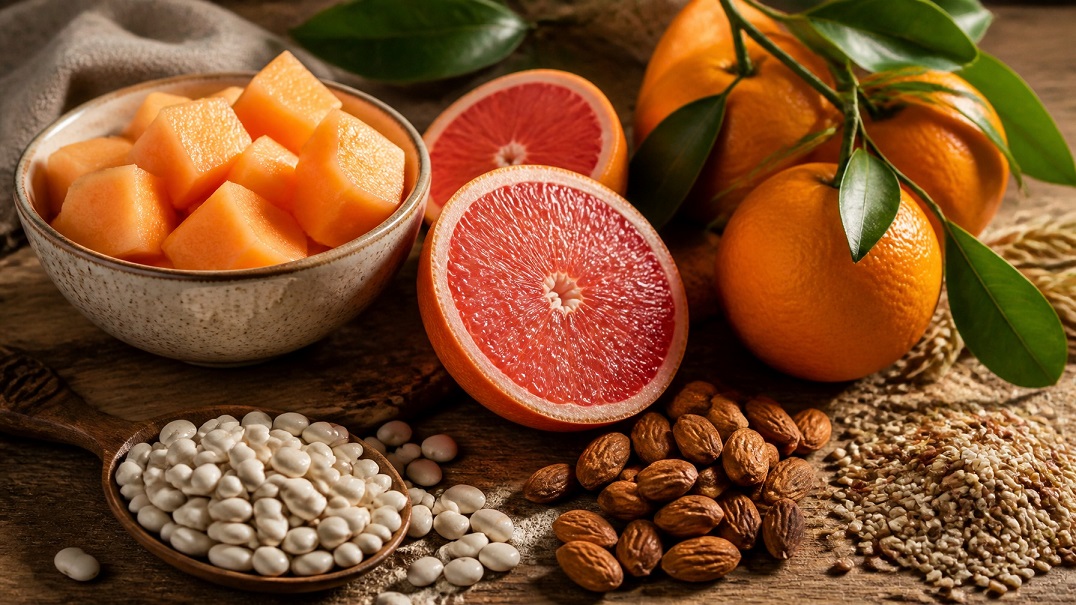
Inositol is often grouped with the B vitamins, but it’s technically a carbocyclic sugar — a naturally occurring compound found in many foods, particularly fruits, beans, grains, and nuts. Your body also produces it from glucose.
There are nine forms of inositol, but two dominate the supplement research: myo-inositol and D-chiro-inositol. Both play important roles in insulin signal transduction — the process by which a cell receives and responds to an insulin signal. When this process works well, cells efficiently take up glucose from the bloodstream. When it breaks down, you get insulin resistance.
Think of inositol as part of the cellular messaging system. Insulin knocks on the cell door, but inositol is part of what opens it. Without adequate inositol, the signal doesn’t translate properly, even if insulin levels are normal.
Myo-Inositol vs. D-Chiro-Inositol: Which Matters More?
Most of the body’s inositol exists as myo-inositol. D-chiro-inositol is a metabolic conversion product — your body converts myo-inositol into D-chiro-inositol using an enzyme called epimerase. This conversion rate differs by tissue type and appears to be impaired in people with insulin resistance and PCOS.
In practice, most research has found the best results from taking both forms together, in a specific ratio. The most studied combination is 40:1 myo-inositol to D-chiro-inositol, which mirrors the ratio found naturally in human blood. Taking too much D-chiro-inositol on its own can actually impair insulin signaling in certain tissues — an important nuance that some supplement labels overlook.
Inositol and Insulin Resistance: The Evidence
The strongest evidence for inositol is in people with impaired insulin signaling, particularly women with PCOS (polycystic ovary syndrome) and people with type 2 diabetes or prediabetes.
Multiple randomized controlled trials have shown that myo-inositol supplementation improves insulin sensitivity, reduces fasting insulin levels, and lowers blood glucose in women with PCOS. One study published in Gynecological Endocrinology found that myo-inositol at 4 grams per day improved insulin sensitivity comparably to metformin in women with PCOS — a notable finding, though the study was relatively small.
For type 2 diabetes, a meta-analysis published in Diabetes, Obesity and Metabolism found that myo-inositol supplementation significantly reduced fasting blood glucose and insulin levels compared to placebo. The effect sizes were modest, but consistent across studies.
How This Connects to GLP-1
Here’s where it gets interesting — and where the evidence thins out. GLP-1 is released by L-cells in the gut when they detect nutrients, and GLP-1 itself then stimulates insulin release from the pancreas. Inositol works further downstream — it supports how cells respond to insulin once it’s already been released, rather than triggering more GLP-1 or insulin to be produced.
That said, there is a plausible indirect connection. Chronic insulin resistance tends to blunt the body’s overall metabolic responsiveness over time, including the efficiency of GLP-1 and insulin working together. By improving insulin sensitivity at the cellular level, inositol may help restore a more functional metabolic feedback loop — making the GLP-1 that your body does produce more effective.
A small number of animal studies have suggested inositol may increase GLP-1 secretion directly, but human data specifically measuring GLP-1 in response to inositol supplementation is limited. This is a gap in the research, not evidence of no effect — but it means we can’t make strong claims about inositol as a GLP-1 booster at this point.
Inositol and PCOS: The Strongest Use Case
If there’s one area where inositol has the most convincing human evidence, it’s PCOS. This matters for this site’s audience because PCOS affects roughly 10% of women of reproductive age and is deeply tied to insulin resistance and metabolic dysfunction.
Research in this population has shown that myo-inositol supplementation (typically 2–4 grams per day, often combined with folic acid) can improve menstrual regularity, reduce androgen levels, lower fasting insulin, improve egg quality in women undergoing fertility treatment, and reduce the proportion of women who develop gestational diabetes during pregnancy.
The 40:1 myo-inositol to D-chiro-inositol combination has shown particularly strong results in PCOS trials, and some researchers now consider it a first-line natural intervention for the condition. This complements the evidence for berberine in PCOS, and the two are sometimes used together.
Inositol and Gestational Diabetes
One of the more compelling areas of inositol research is in preventing gestational diabetes — elevated blood sugar that develops during pregnancy. Several randomized controlled trials have found that myo-inositol supplementation during pregnancy significantly reduced the rate of gestational diabetes in high-risk women compared to placebo.
This is not a fringe finding — it’s replicated across multiple studies and has led to inositol being discussed in clinical guidelines in some European countries. It’s worth mentioning here because it underscores how real inositol’s effects on glucose metabolism are, even if the GLP-1 mechanism isn’t the primary driver.
Forms, Dosing, and What to Look For
Inositol supplements come in powder and capsule form. Powder tends to be the more practical option since effective doses are measured in grams, not milligrams, making large capsule counts necessary otherwise.
Myo-inositol alone: The most studied dose is 2 to 4 grams per day, typically split into two doses taken with meals. This is the baseline for most blood sugar and PCOS research.
Combined myo-inositol and D-chiro-inositol (40:1 ratio): Products using this ratio — such as 2,000 mg myo-inositol with 50 mg D-chiro-inositol — have shown strong results in PCOS trials and are a reasonable choice for women with hormonal and metabolic concerns together.
Look for products that clearly state the ratio and forms used. Generic “inositol” on a label often means myo-inositol only, which is fine as a starting point, but the combined ratio has better evidence for PCOS specifically.
Is Inositol Safe?
Inositol has an excellent safety profile. It’s a naturally occurring compound that your body already produces and uses, and clinical trials have used it at 2 to 4 grams per day for extended periods without significant adverse effects.
The most common side effects at higher doses are mild gastrointestinal symptoms — nausea, loose stools, or bloating — which typically resolve as the body adjusts or when the dose is lowered. Starting with 1 gram per day and increasing gradually over two to three weeks tends to minimize this.
As with chromium and cinnamon extract, anyone taking prescription blood sugar medications should check with their doctor before adding inositol, since combining glucose-lowering agents can push blood sugar lower than intended.
Practical Takeaway: How Inositol Fits into a GLP-1 Support Plan
Inositol won’t directly spike your GLP-1 levels the way berberine or soluble fiber can. What it does is support the downstream machinery that makes insulin — and by extension, the GLP-1 that triggers it — work more effectively. For people with insulin resistance, PCOS, prediabetes, or a history of gestational diabetes, that’s a meaningful distinction.
The most practical approach: if you have signs of insulin resistance or a PCOS diagnosis, myo-inositol at 2 to 4 grams per day (or the 40:1 combination if PCOS is a primary concern) is worth considering alongside your other metabolic support strategies. If your insulin sensitivity is already healthy, the benefit is likely small.
Inositol pairs logically with berberine or fiber-based supplements that more directly stimulate GLP-1 release — covering both the upstream trigger and the downstream response. For more on how supplements work together, see Combining Berberine with Other GLP-1 Boosting Supplements.